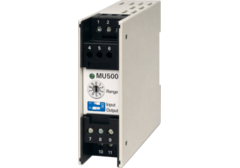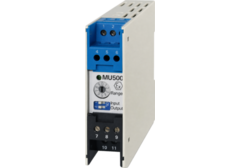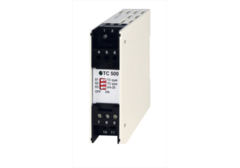

Stable temperature signals are essential when RTD sensors feed a process control system. This transmitter converts Pt100 or Pt1000 field signals into standard analog outputs, helping control cabinets receive clean, usable values from industrial temperature measurements.
The measuring range can be selected freely within the specified start value and span limits, making the unit suitable for tailored temperature tasks instead of fixed-range installations. Both 0/4–20 mA and 0/2–10 V outputs are available simultaneously, giving integrators flexibility when connecting to PLCs, controllers or display units.
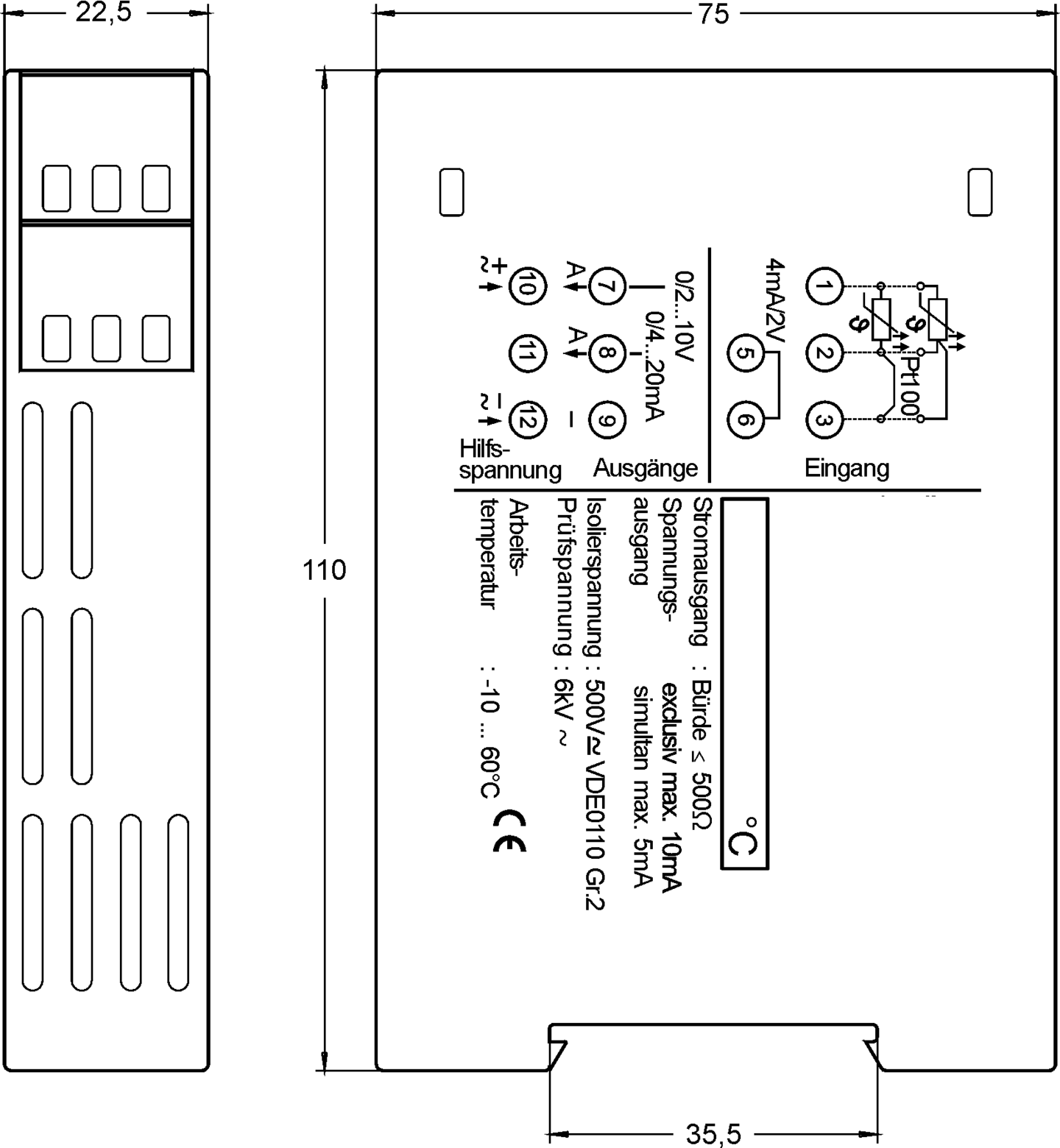
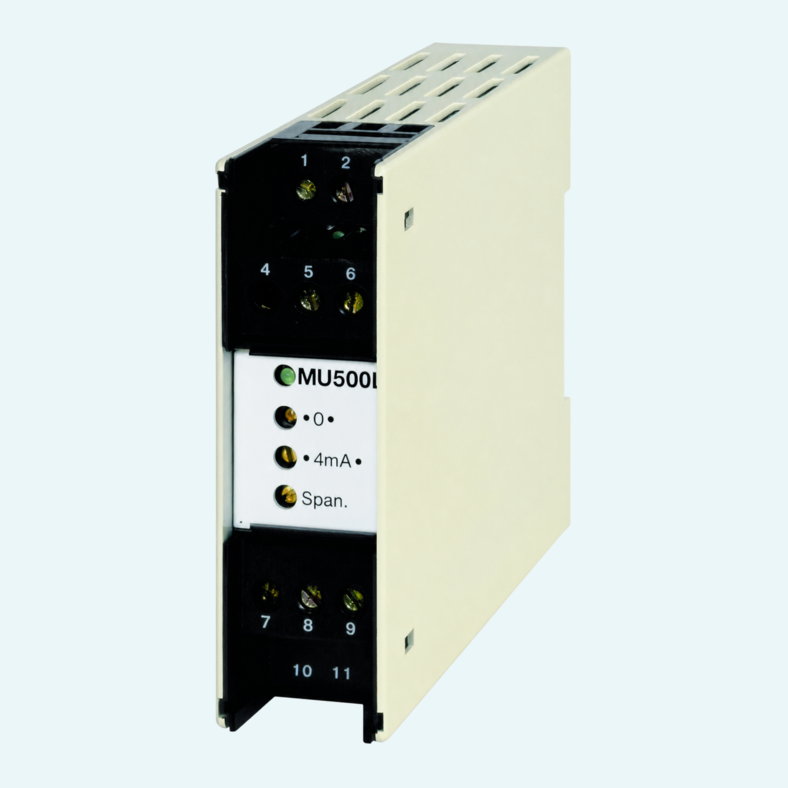
For dependable cabinet operation, the supply voltage is isolated from input and output, with 230 V AC or 24 V DC supply versions available. Front-side trimpots allow adjustment of start value, 4 mA/2 V and span, while the 22.5 mm polycarbonate case mounts directly on a TS35 DIN rail.

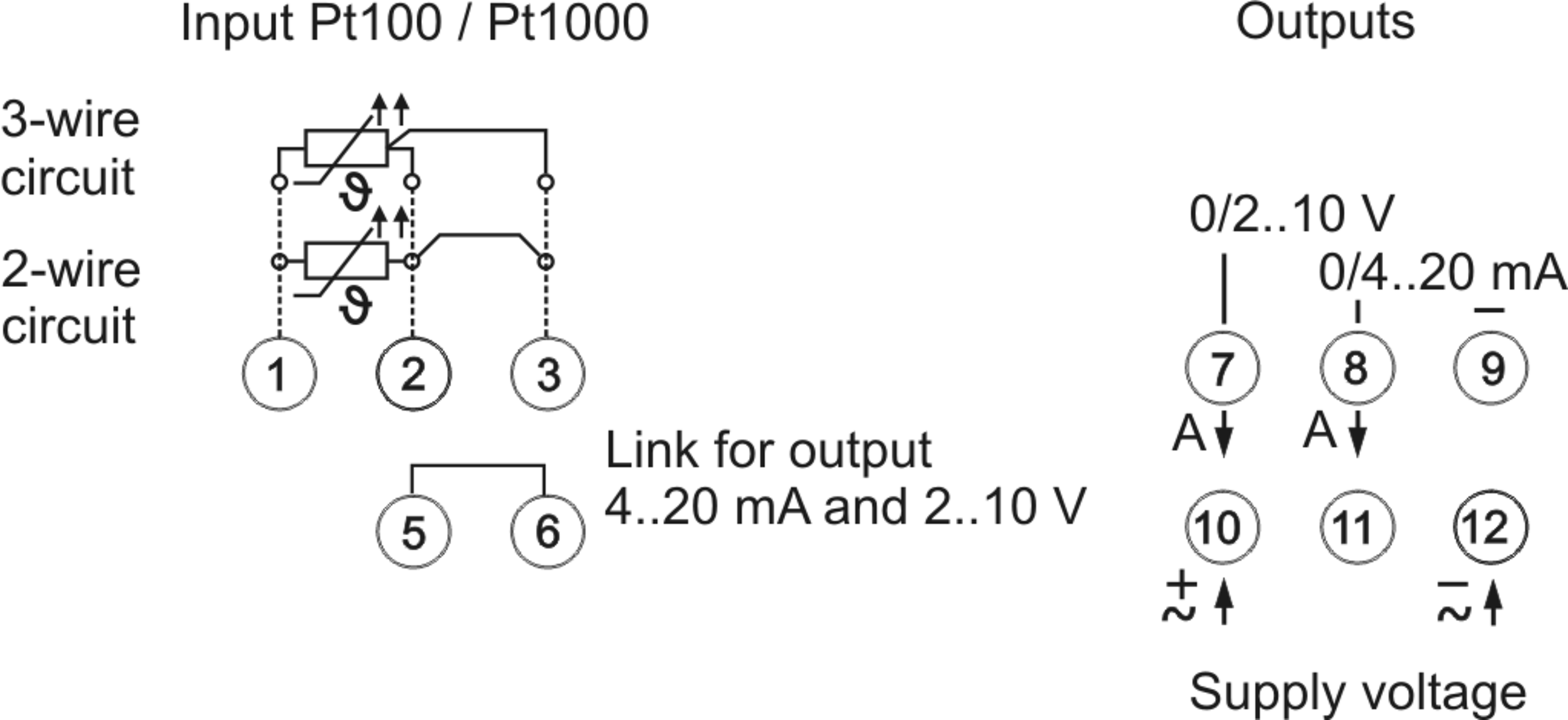
The transmitter accepts Pt100 or Pt1000 RTD signals in 2-wire or 3-wire connection.
Current and voltage outputs are selectable by link, with 0/4–20 mA and 0/2–10 V variants available.
Start value, 4 mA/2 V point and span are adjusted using 20-turn trimpots on the front side.
The 3-wire configuration provides automatic line resistance compensation up to 10 Ω symmetric line resistance.
A broken line drives the output to the maximum value, while a short circuit drives it to the minimum value.
The transmitter is available for 230 V AC or 24 V DC supply, depending on the ordered version.