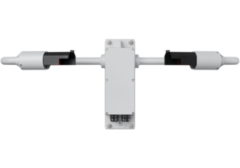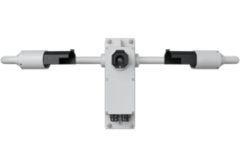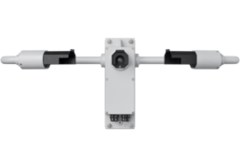
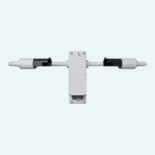

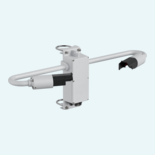


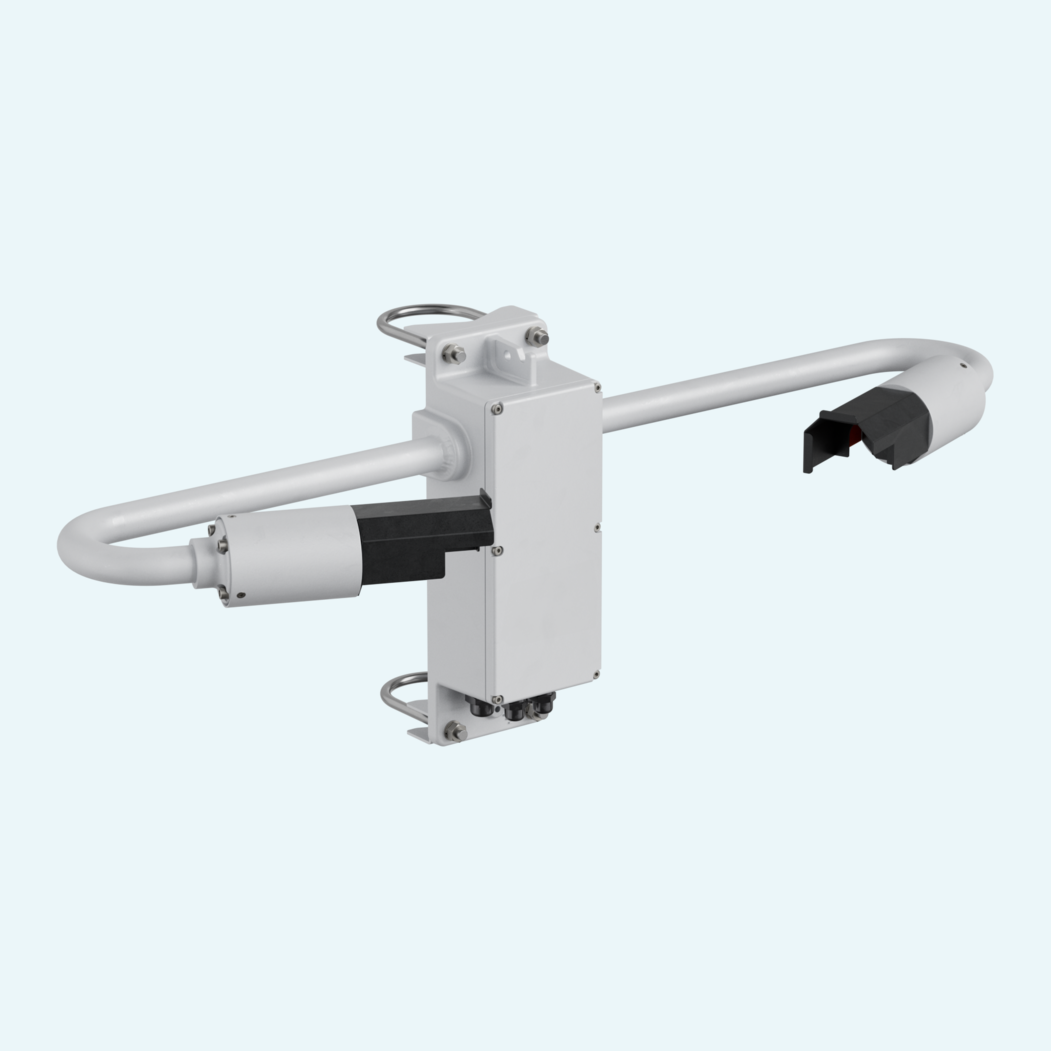
When visibility drops, operators need to know both how far you can see and what is causing the reduction. SWS-100 combines forward scatter visibility measurement with fundamental present weather identification, reporting key WMO Table 4680 precipitation codes such as drizzle, rain, snow, fog, haze and unidentified precipitation.
The default visibility range is 10 m to 2 km and can be extended by configuration command up to 99,99 km, allowing the same sensor platform to be matched to different sites and network standards. Measurement performance is stated as comparable to a transmissometer, while avoiding the size and maintenance burden of traditional transmissometer installations. Calibration follows ICAO 9328 and is traceable to a national weather service transmissometer, supporting aviation use and RVR systems when combined with the ALS-2 Ambient Light Sensor.
Designed for unattended outdoor operation, the sensor includes hood heating (enabled at 2 °C and disabled at 4 °C) and window heaters as standard. Contamination monitoring supports automatic correction and staged cleaning warnings. Integration uses ASCII serial output over RS232, RS422 or RS485 at selectable 10 to 300 s intervals, with optional analogues and relays (AR) or ALS-2 interface options depending on configuration.


Uses IR forward scatter principle to provide instantaneous and averaged MOR values.
Outputs 7 WMO 4680 codes for fundamental precipitation and obscuration identification.
RS232, RS422 or RS485 outputs transmit ASCII messages at user-defined 10 to 300 s intervals or on request.
Available with ALS-2 interface (WA) for RVR applications or with analogues and relays interface (AR: 0...10 V and 4–20 mA plus relays), depending on the ordered version.
Automatic correction and two-stage cleaning warnings support longer maintenance intervals, with monitoring fitted as standard on the transmitter window.
IP66/IP67 aluminum housing operates from -40 °C to +60 °C at 0...100% RH.
Code: 10. [1] [2] [3] [4] [5] [6] [7]
Example: 10A.HV.J.A.PG.NA.RC
[1] Housing
Blank = Powder coated aluminium (standard)
A. = Hard coat anodized, powder coated
[2] Hood Heating
NH = Without heating
HV. = With heating
[3] Standard outputs
J. = Standard outputs (RS-232 / RS-422 / RS-485)
[4] Self-Test and Monitoring
S. = Standard self-test and monitoring
A. = Advanced self-test and monitoring
[5] Cable glands
PG. = Standard plastic cable glands
MG. = Single metal cable gland
[6] Option Board
NA. = Without Option Board
WA. = With ALS-2 Interface
AR. = With analogues and relays interface
[7] Configuration
RC = Regular configuration
SC = Special configuration