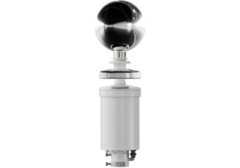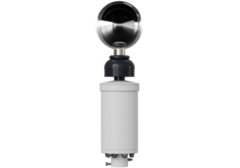
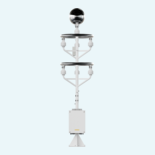
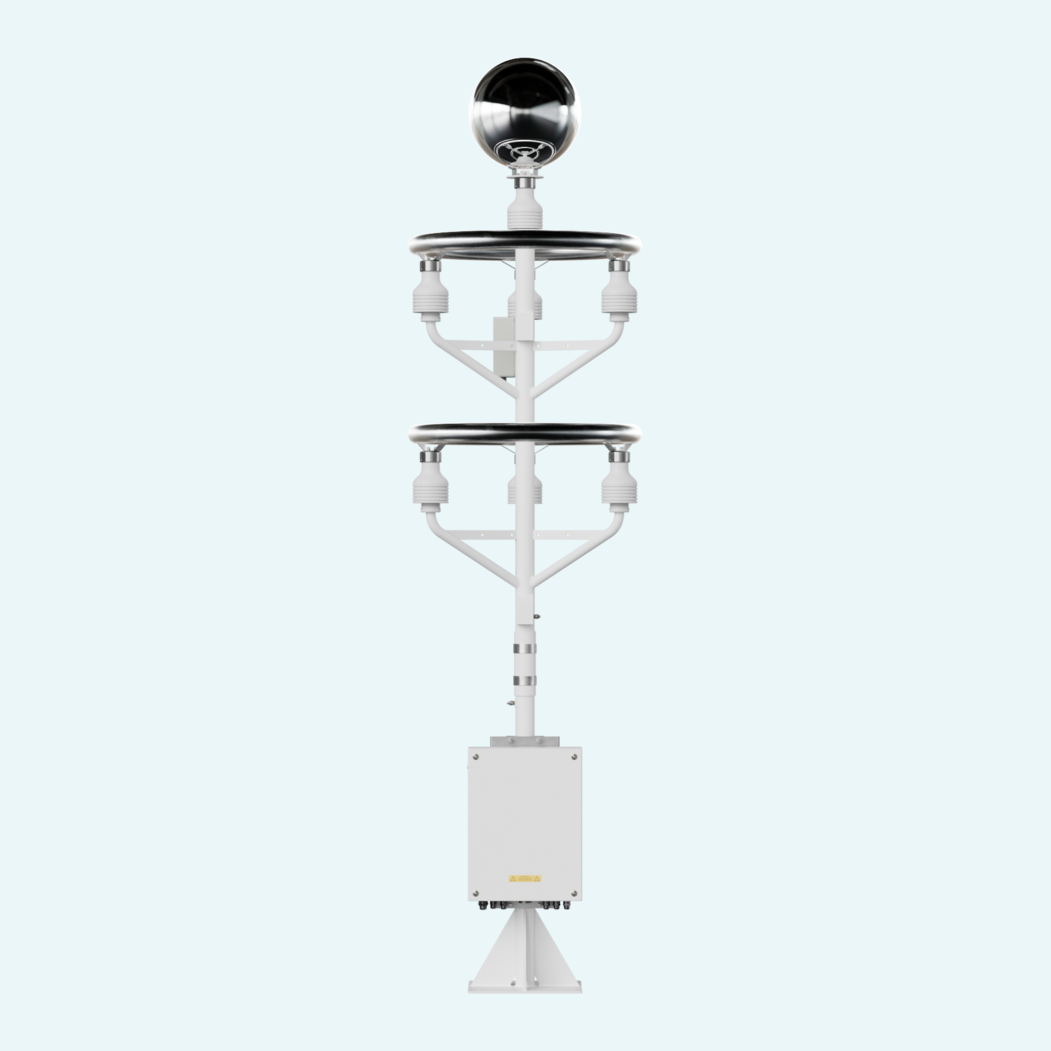
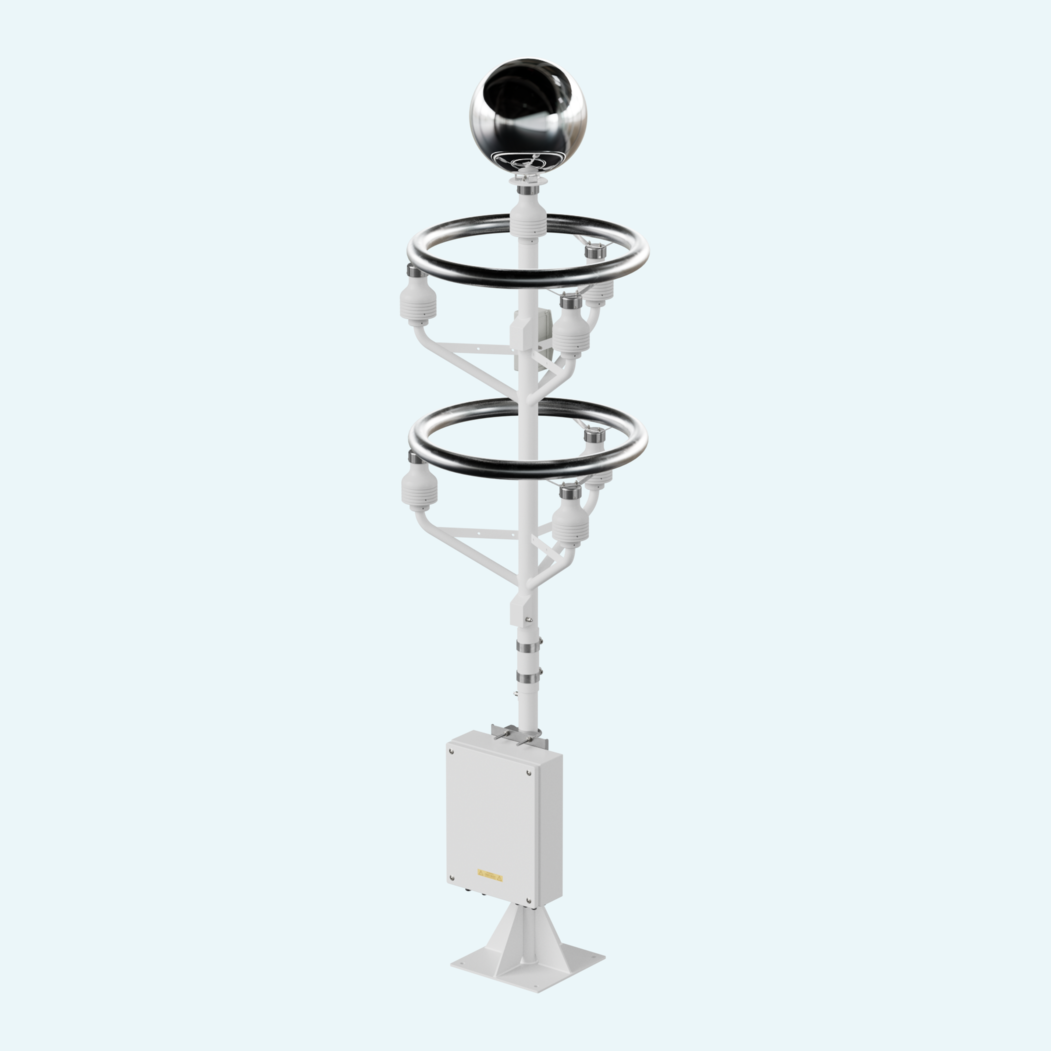
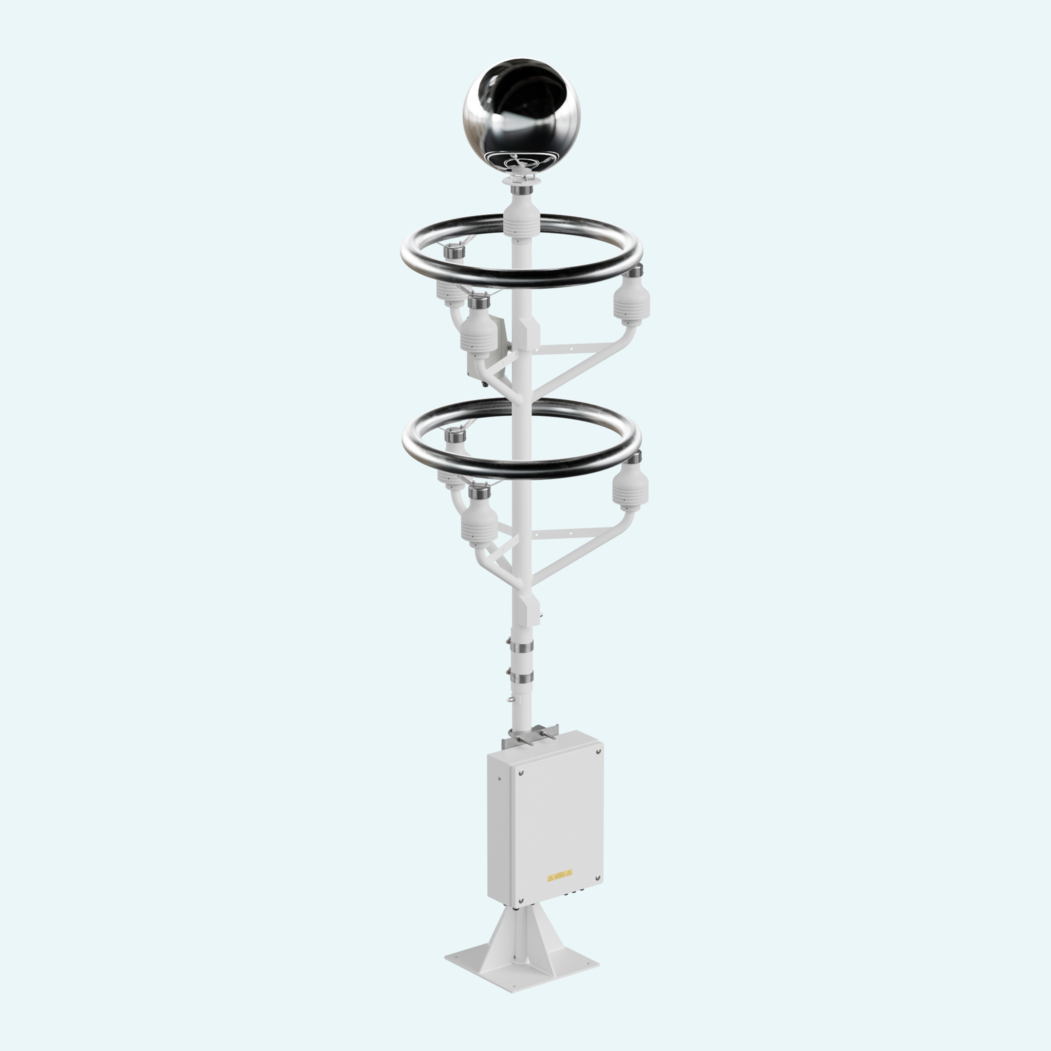
Marine and offshore operations need lightning information early and without nuisance alarms. The BTD-350 detects major lightning types out to 83 km and monitors local electric field changes and charged precipitation, helping teams start safety procedures before overhead lightning becomes a direct threat.
Its passive quasi-electrostatic principle uses three antennas to sense low-frequency atmospheric field disturbances rather than man-made radio noise. This gives strong immunity to EM interference, supports a false alarm rate below 2% and delivers 95% detection efficiency for a single flash, rising to 99–99.9% for storms with multiple flashes within 56 km.
Designed for large vessels, offshore installations and helideck monitoring, the detector connects via RS422 serial or Ethernet and can trigger alarms through optional volt-free relays. IP66 stainless steel and powder coated aluminium construction operates from -40 °C to +60 °C and is certified for marine EMC, salt spray and vibration.


Three antennas sense low-frequency atmospheric electric field disturbances generated by lightning discharges.
The detector identifies cloud-to-cloud, cloud-to-ground, cloud-to-air and intra-cloud discharges.
RS422 serial or Ethernet output reports self-test status, thunderstorm warning status, flash time, flash range and optional direction.
Three volt-free relay contacts provide caution state, warning state and alert state for autonomous local alarms.
The optional direction-finding module provides storm direction information with 1° resolution.
Warning thresholds and relay disabled times are user configurable to match site operating requirements.
Reinforced stainless steel and powder coated aluminium construction supports marine and offshore installation.
Supplied software provides display and logging functions for direct computer-based monitoring.
Code: BTD350. [1] [2] [3] [4]
Example: BTD350.NH.TE.WR.RC
[1] No additional heating
NH. = No additional heating
[2] Data output
TE. = Ethernet output
TD. = RS422 Serial
[3] Relay output
NR. = Without relay outputs
WR. = With relay outputs
[4] Configuration
RC = Regular configuration
SC = Special configuration