

Amphibious vehicles require dependable information about both fuel availability and engine cooling performance. A customized level sensor measures the diesel remaining in the fuel tank, allowing the vehicle system to estimate driving range and support the planning of critical missions. At the same time, a hydraulic cooling circuit drives the radiator fan independently of engine RPM. Measuring pressure between the hydraulic pump and hydraulic motor confirms whether sufficient pressure is available to drive the fan under thermal load. Changes in pressure can also indicate abnormal behavior and support activation of the relief valve. Vehicle designers, system integrators, operators, and maintenance teams use these measurements to monitor key functions, respond to developing faults, and maintain vehicle readiness in demanding operating conditions.


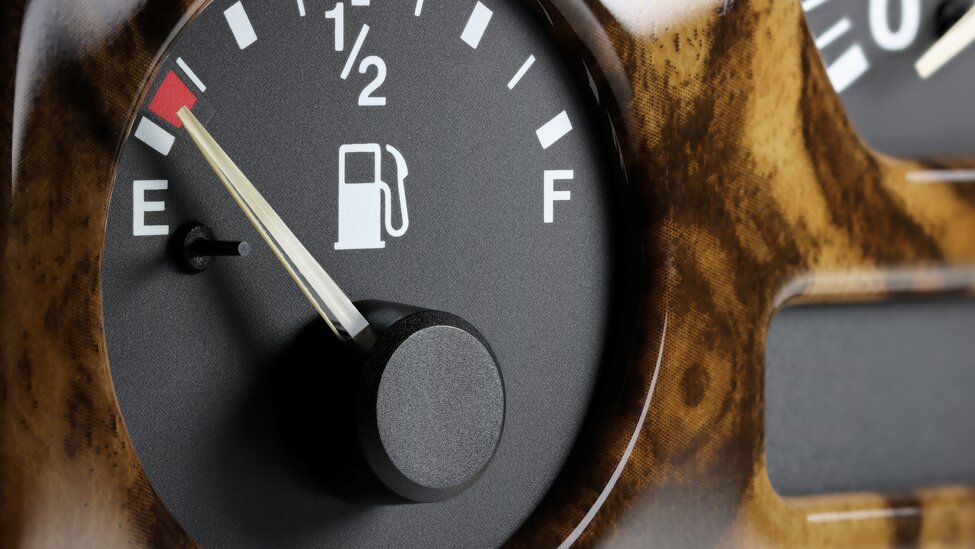
The customized level sensor measures the amount of diesel inside the tank through a float and reed-chain assembly. With a stated measuring resolution of 10 mm, it provides a direct level value that the vehicle system can use to calculate remaining fuel and estimated driving range. The resistive output is configured to the customer specification. Direct measurement reduces dependence on indirect factors and keeps the signal tied to the actual fuel level. The float principle also offers a simple measurement concept for a mission-critical vehicle application.

Senseca can configure the sensor to the customer's mechanical drawing and electrical requirements. The source application specifies a flange connection and dimensions defined by the vehicle, with components suited for every application. This approach accommodates tank geometry, available installation space, and the vehicle's wiring architecture without forcing a standard component into a fixed design. The output characteristic is also set to the customer specification. For qualification, the complete assembly must be assessed against the vehicle's shock, vibration, sealing, and fuel-compatibility requirements. The result is a sensor that can be integrated into the platform rather than adapted after installation.

The hydraulic circuit drives the radiator fan independently of engine RPM. The Precont PK4S measures pressure between the hydraulic pump and hydraulic motor to confirm sufficient pressure generation under thermal load. This measurement provides the control system with an indication of whether the fan drive is operating as required to cool the heat exchanger. Pressure deviations can indicate abnormal circuit behavior and support activation of the relief valve or another defined protective response. The pressure signal therefore contributes to engine thermal management and helps maintain cooling performance during changing operating conditions.

The Precont PK4S uses fast pressure-sensing technology with a response time below 15 ms. This allows the monitoring system to respond quickly when cooling requirements change or pressure behavior becomes abnormal. The solution is designed around reliable electronic components, high temperature resistance, high vibration resistance, and high measurement accuracy. These characteristics are relevant to installations close to the combustion engine, where the sensor must withstand demanding ambient and operating conditions. The final pressure thresholds, alarm logic, and protection sequence should be defined during integration with the vehicle's cooling and control system.

Vehicle enhancements to on-board diagnostics reduce maintenance burdens and increase vehicle readiness.