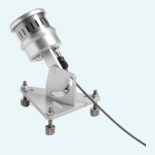
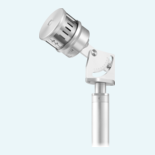
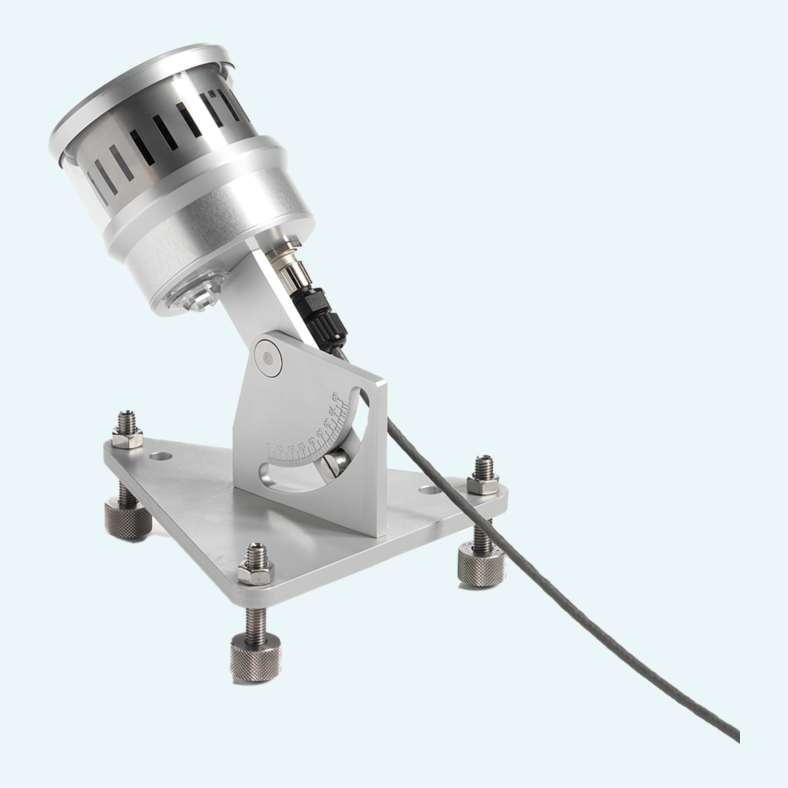
Sunshine presence data is essential for weather observation, crop studies, photovoltaic performance checks and building automation. This sunshine duration sensor measures sunshine status and duration according to the WMO definition, where direct solar radiation exceeds 120 W/m2.
A 16-photodiode array measures direct radiation (SRD) from 0…2000 W/m2 and determines sunshine duration with 1 s resolution. The geometry avoids mechanical moving parts, supporting reliable long-term operation without seasonal positioning adjustments. It can also provide SRD data as a lower-cost alternative to a pyrheliometer that requires a solar tracker.
The sensor is built for changing weather. IP66 protection, an anti-condensation heating element and optional antifreeze heating help protect the glass surface against condensation, ice and snow. Output options include RS485 Modbus-RTU, SDI-12, galvanically isolated contact, 0…1 V analog output and 0…1 V digital voltage output, depending on the model.


Sixteen silicon photodiodes are arranged so at least one sensor receives direct sunlight when sun is present.
The sensor reports sunshine status and duration with 1 s resolution based on the 120 W/m2 threshold.
Non-directly illuminated photodiodes measure diffuse light, which is subtracted to calculate direct radiation.
Models provide RS485 Modbus-RTU with contact, RS485 with analog and digital voltage, or SDI-12 with contact output.
A separately powered, galvanically isolated heating element prevents condensation on the glass surface.
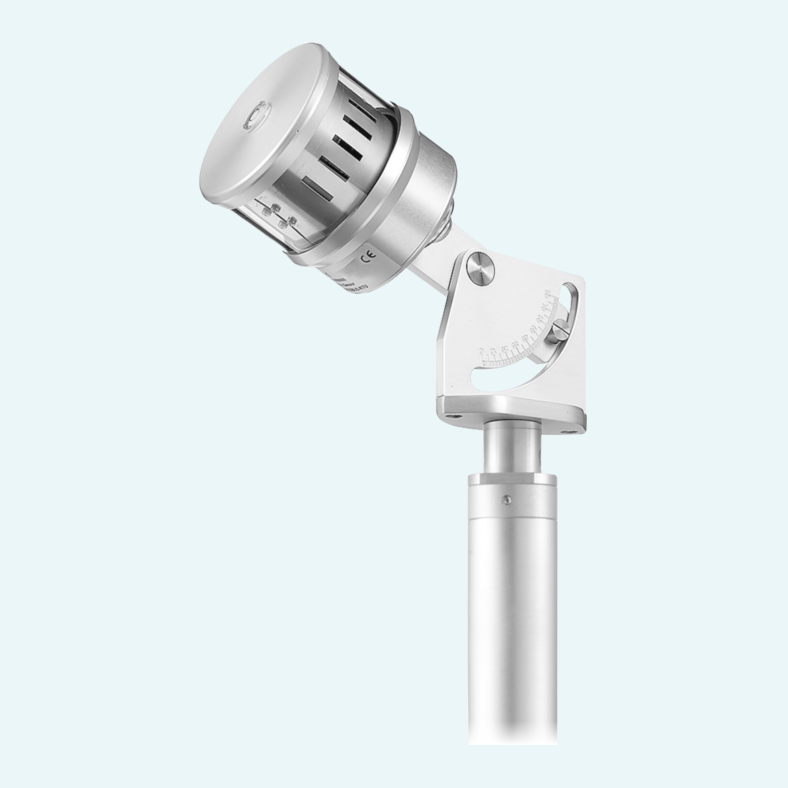
Optional base or Ø 40 mm mast support allows adjustment up to 80° to match the latitude of the installation site.
Code: LPSD18. [1]
Example: LPSD18.1R
[1] Option
1 = RS485 and contact outputs
1R = RS485 and contact output, with heating
2 = RS485, analog and digital outputs
2R = RS485, analog and digital outputs, with heating
3 = SDI-12 and contact outputs
3R = SDI-12 and contact outputs, with heating