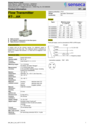
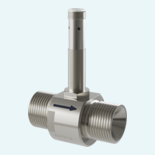
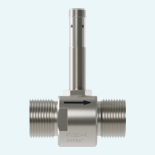
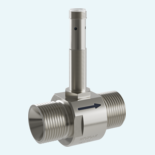
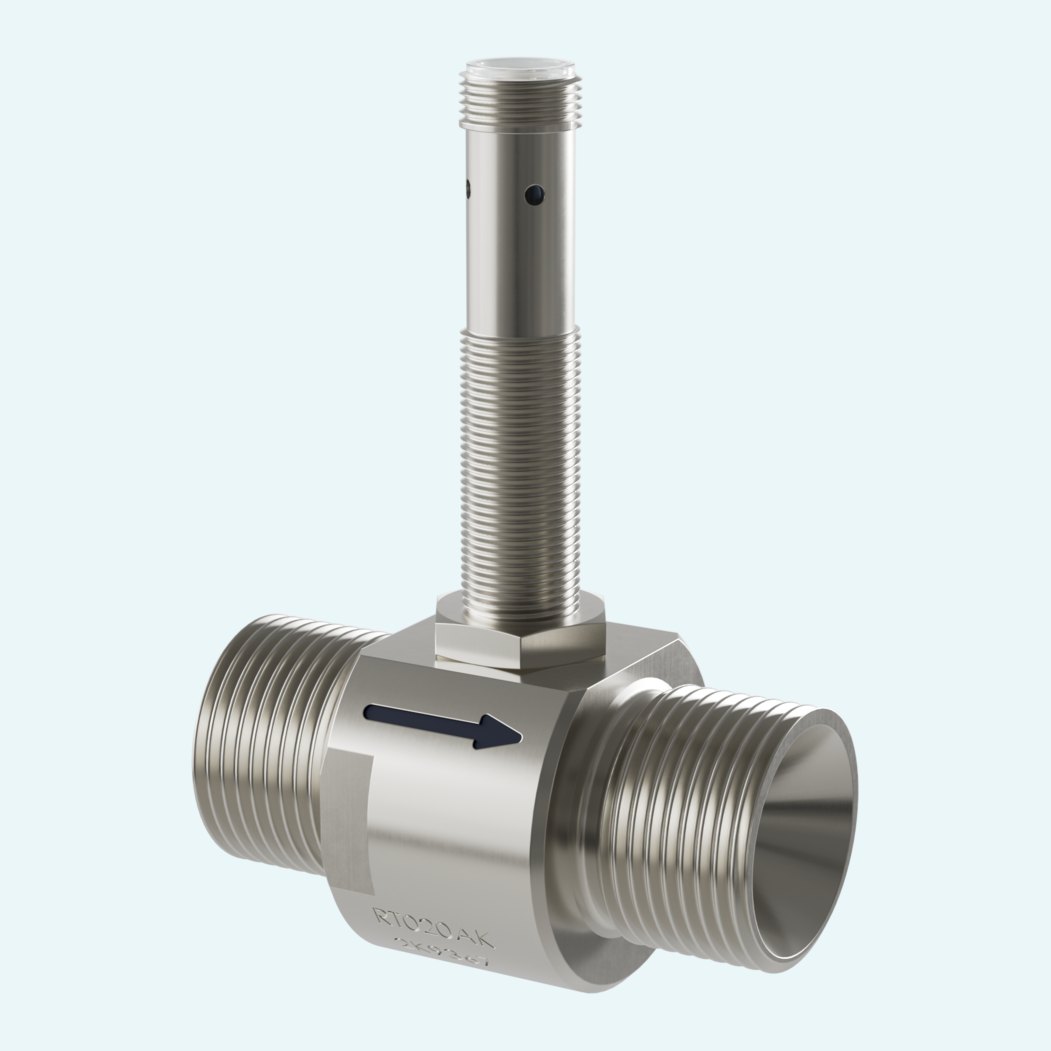
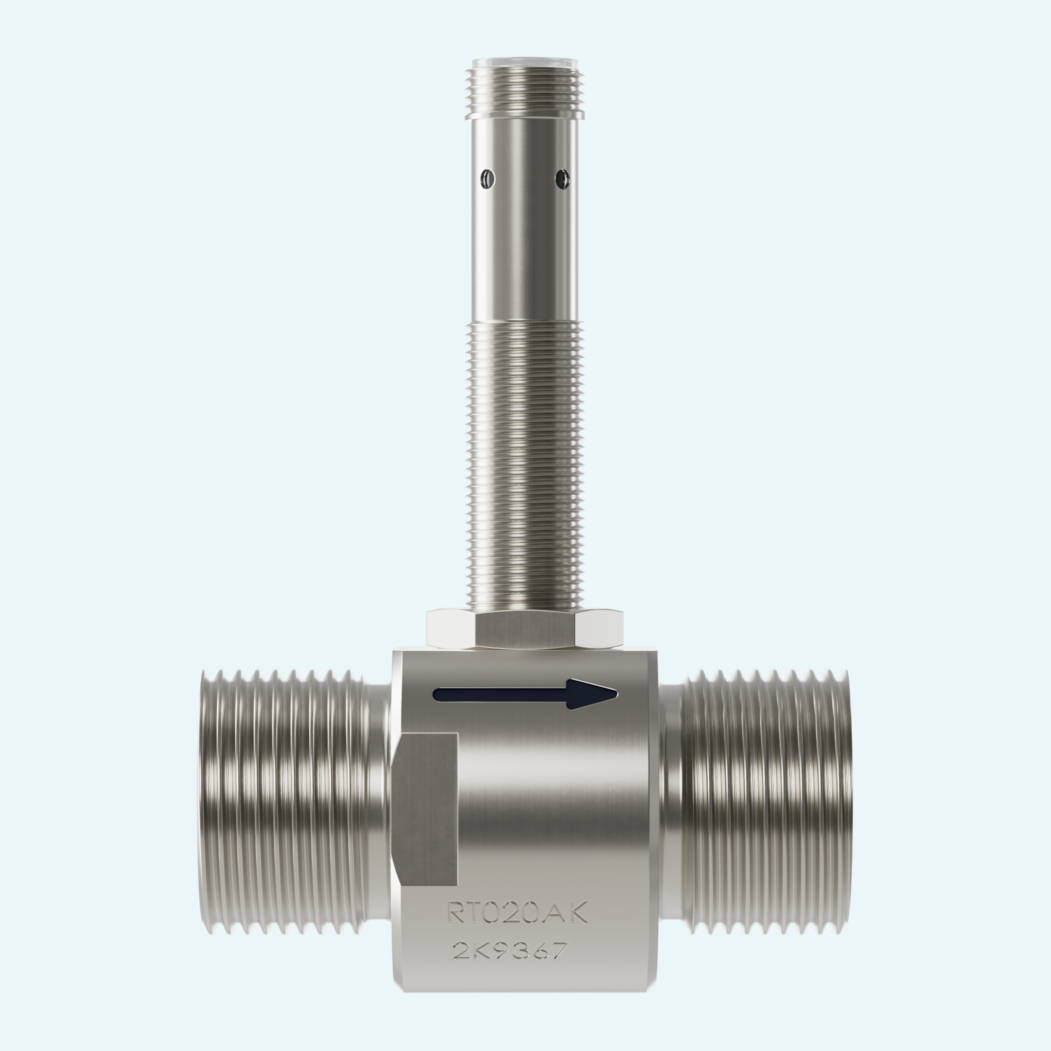
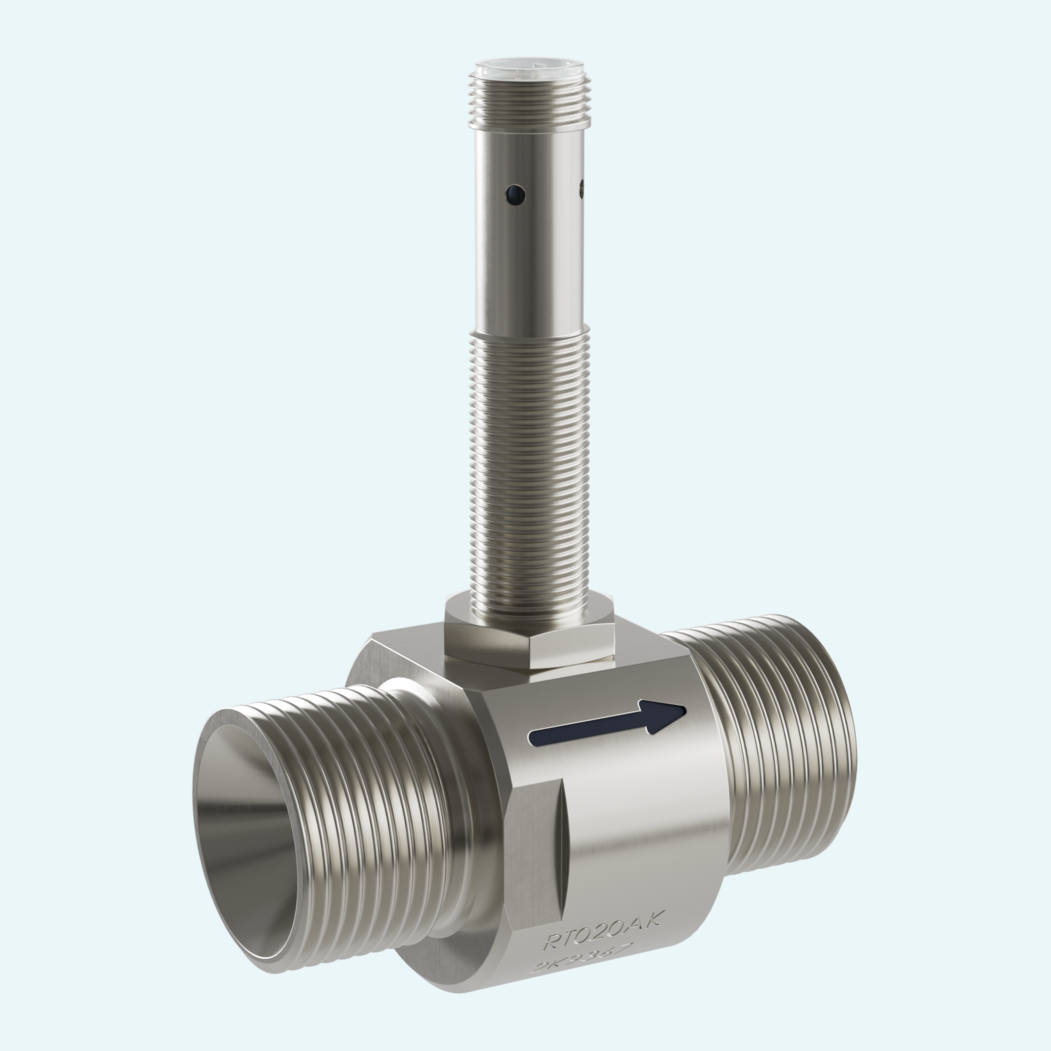
Reliable flow measurement starts with a sensor design that keeps the flow path clear. This turbine-based transmitter detects speed using biased Hall sensors, so no magnetic components sit in the flow chamber. For operators, that means dependable pulse detection with low pressure loss, specified at 0.3 bar at Qmax.
The family covers liquid flow ranges from 1.8...1133 l/min across DN 15...50 sizes, with G 1/2 A...G 2 A male thread connections. Accuracy is specified at ±1 % of full scale in the defined measuring range, including linearity and repeatability, giving users a solid basis for process monitoring and control tasks.
Designed for demanding installations, the transmitter combines PN 250 pressure resistance with ingress protection (IP67) and a short-circuit and reverse-polarity protected push-pull output. The output can be connected to PNP or NPN inputs, which simplifies integration into existing control systems.

A turbine acts as the primary sensor element. Its rotational speed is proportional to the flowing volume and is detected electronically.
The transistor output is short-circuit and reverse-polarity protected and can be wired with PNP or NPN inputs.
The family is available in DN 15...50 nominal sizes with male thread connections from G 1/2 A to G 2 A.
Wetted materials include nickel-plated CW614N housing, stainless steel turbine and tungsten carbide bearing.
Installation before a valve on the pressure side is recommended, with good venting and 10 x D calming sections before and after the turbine.
Standard media temperature is -20...+85 °C. A high-temperature version up to +150 °C is available at minimum system pressure of 8 bar.