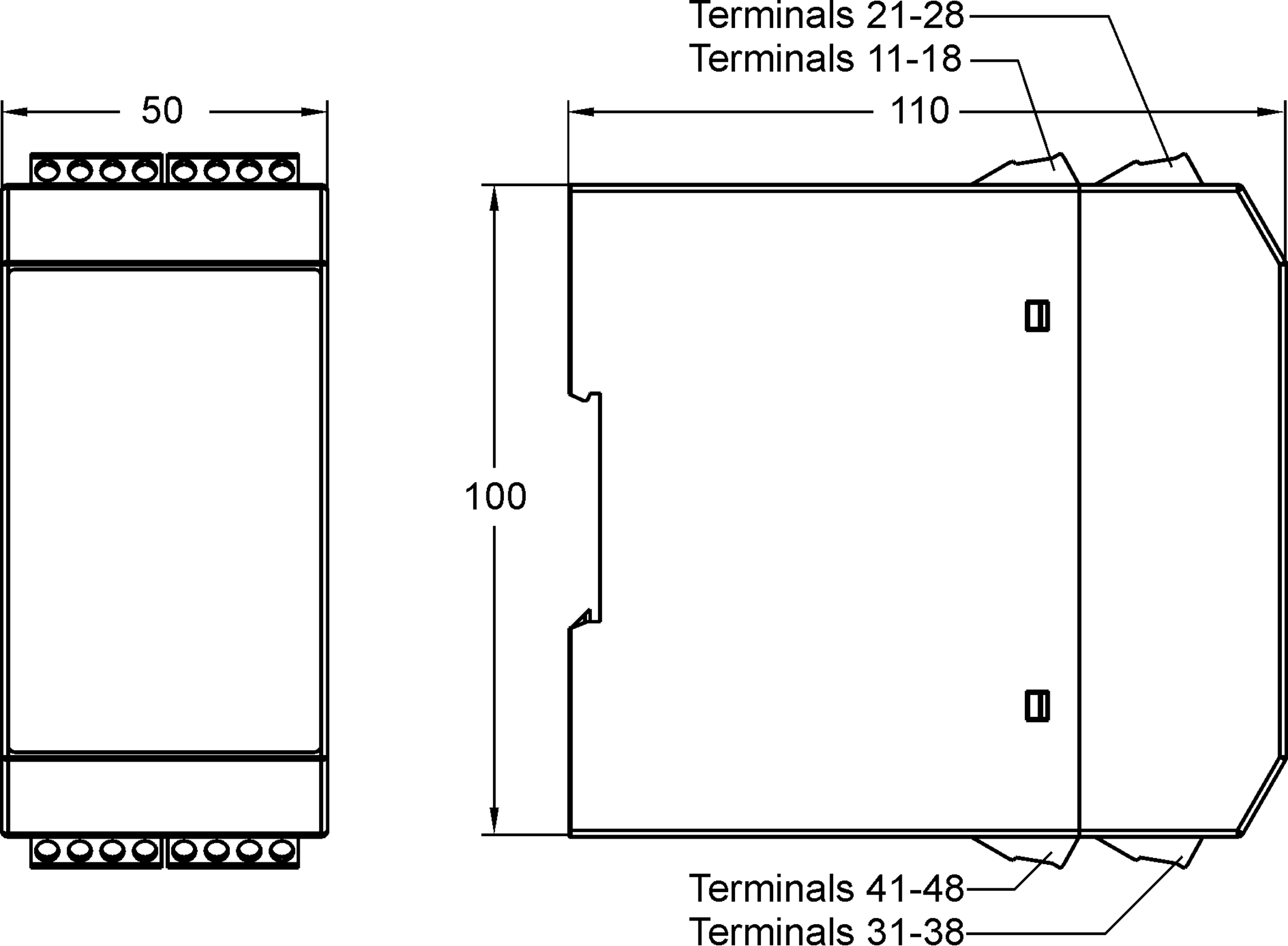
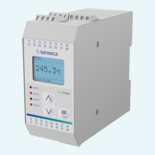
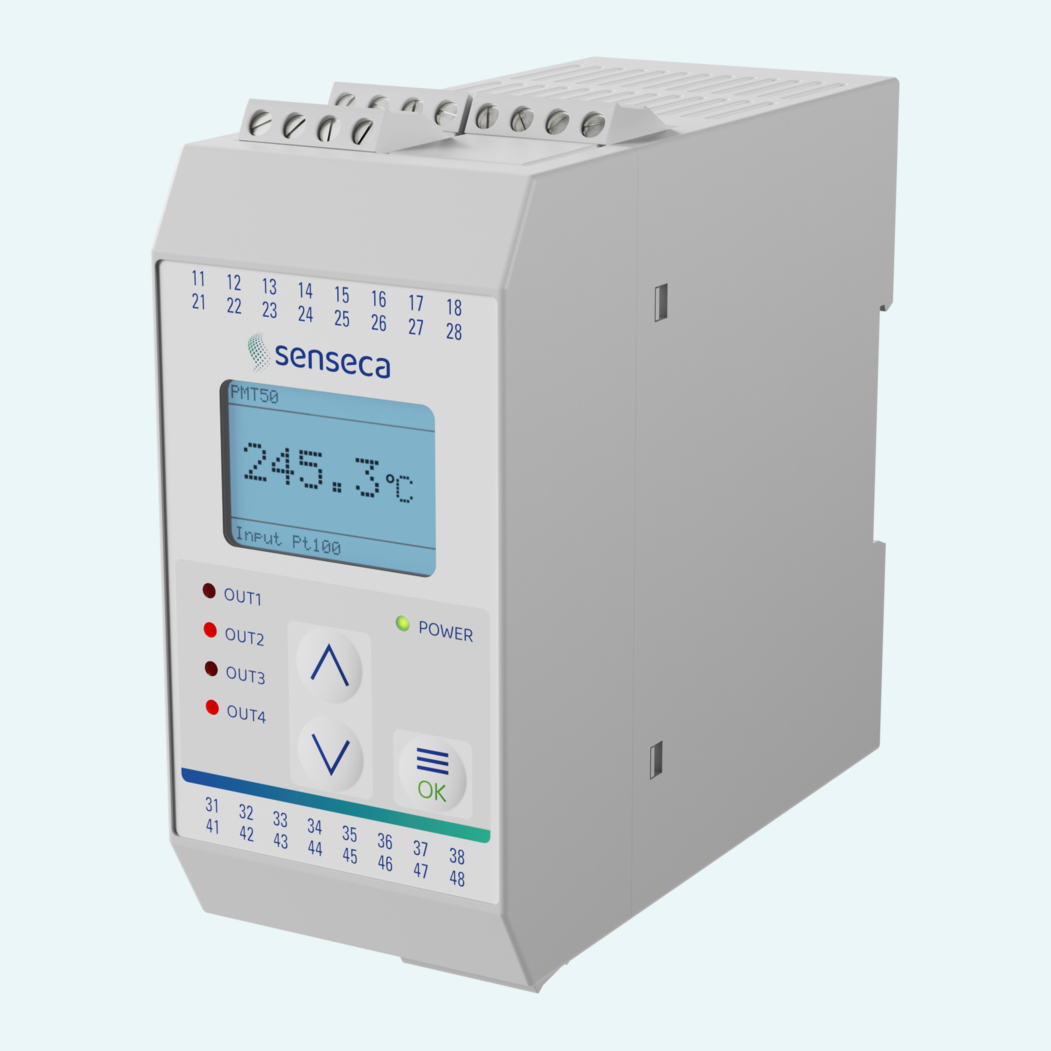
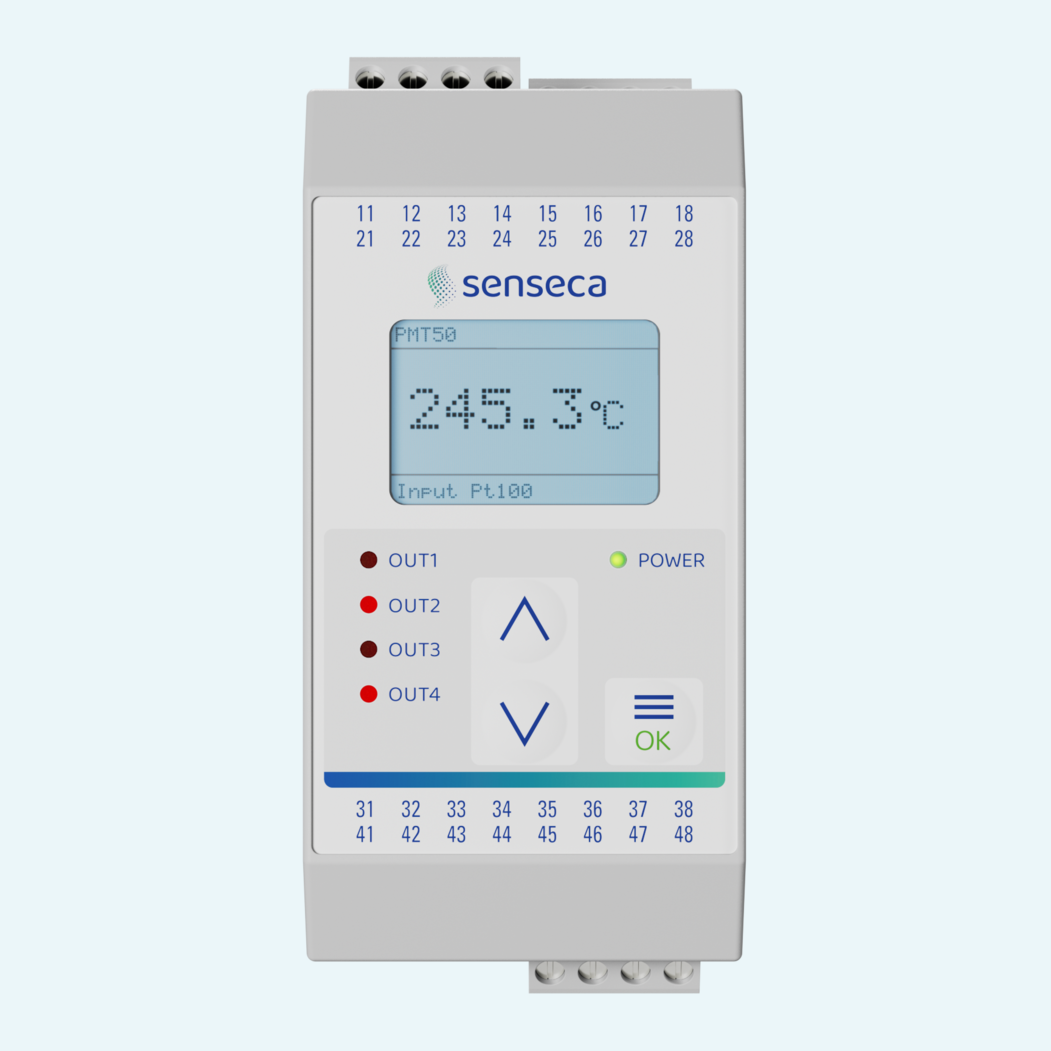
Complex temperature signals are easier to integrate when one transmitter can scale, linearize and monitor them in the cabinet. This programmable temperature transmitter accepts Pt100, Pt1000 and thermocouple J, K, N and S inputs, converting them into isolated 0/4..20 mA or 0/2..10 V DC output signals.
The measuring range is programmable, and the output characteristic can be transformed or linearized using up to 32 base points. This makes the device suitable for adapting sensor curves or special output behavior without additional signal processing. A Teach In function stores input signals for start and end values or characteristic curve points, while a simulator function supports commissioning and testing.
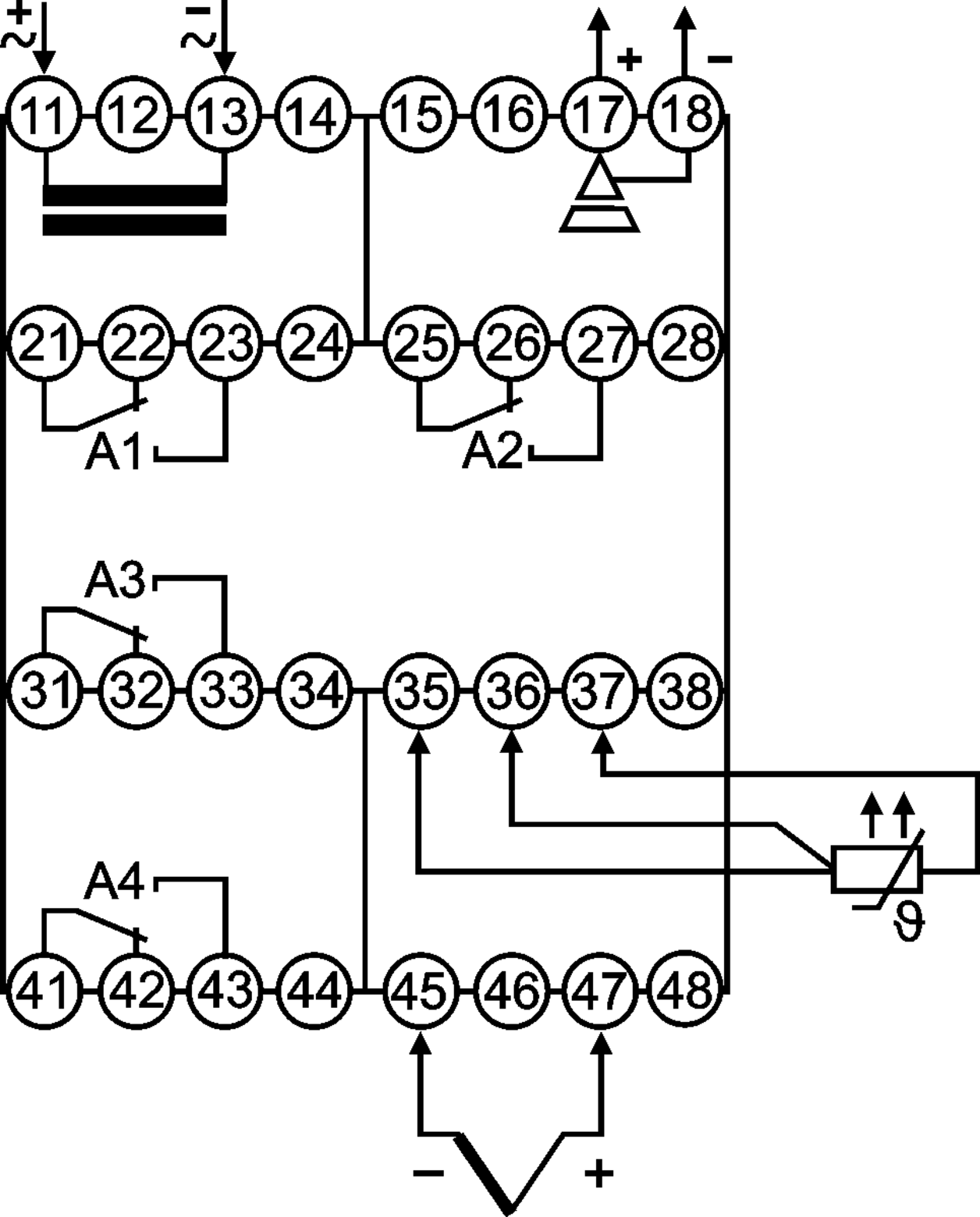
For monitoring, up to four SPDT relay alarm outputs are available. Fault detection covers broken lines for Pt100, Pt1000 and thermocouples, and short circuits for Pt100 and Pt1000. In a fault condition, the analog output can be set to 0 mA, < 3.6 mA or > 21.5 mA.

The device accepts Pt100 and Pt1000 in 3-wire connection, plus thermocouples Type J, K, N and S.
The measuring range can be configured for the connected temperature input and assigned to the analog output.
The isolated output provides 0/4..20 mA or 0/2..10 V DC and changes automatically depending on the connected burden.
Linear and nonlinear curves can be configured with value pairs, with up to 32 base points for nonlinear sensor curves.
Input signals for start and end value, or for characteristic curve points, can be stored automatically during programming.
The simulator function supports commissioning by allowing output behavior to be checked without relying only on live process conditions.
Relay alarm outputs can be programmed as min. or max. functions, with switch-on and switch-off delay from 1 s up to 9 h.
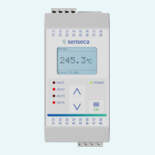
The device is programmed via front buttons in connection with a 128 x 64 pixel graphic LCD display with white backlighting.