
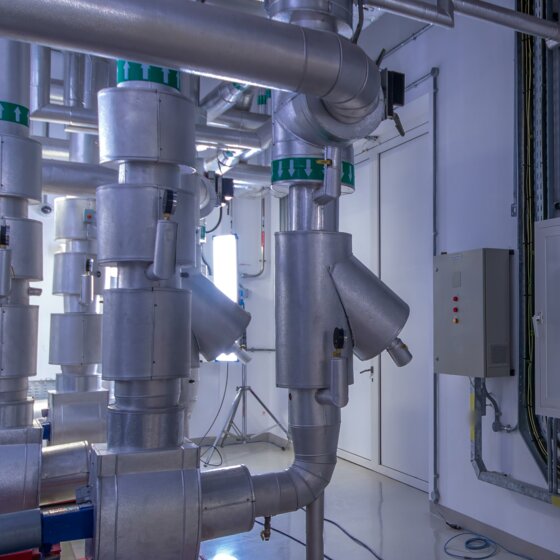
Heat is an unavoidable by-product of industrial machinery. Wherever mechanical or electrical processes generate it, a cooling circuit must remove it, using water, water-coolant mixtures, or in some applications oil. The common principle across all of these media is the same: the cooling fluid must be moving. A coolant that is present but stationary provides no thermal protection whatsoever, which makes flow rate the critical parameter to monitor.
Machine builders and plant operators both depend on cooling monitoring to protect equipment from thermal damage. Whether integrated into a new machine design or retrofitted into an existing installation, flow measurement devices must confirm that sufficient media is passing through the circuit at any given moment. A flow switch or transmitter that detects the absence of flow, or a flow rate that has dropped below a safe threshold, gives the control system the signal it needs to intervene before damage occurs. For both OEMs designing machines and end users running them, reliable cooling monitoring is not optional: it is the last line of defence against equipment destruction.


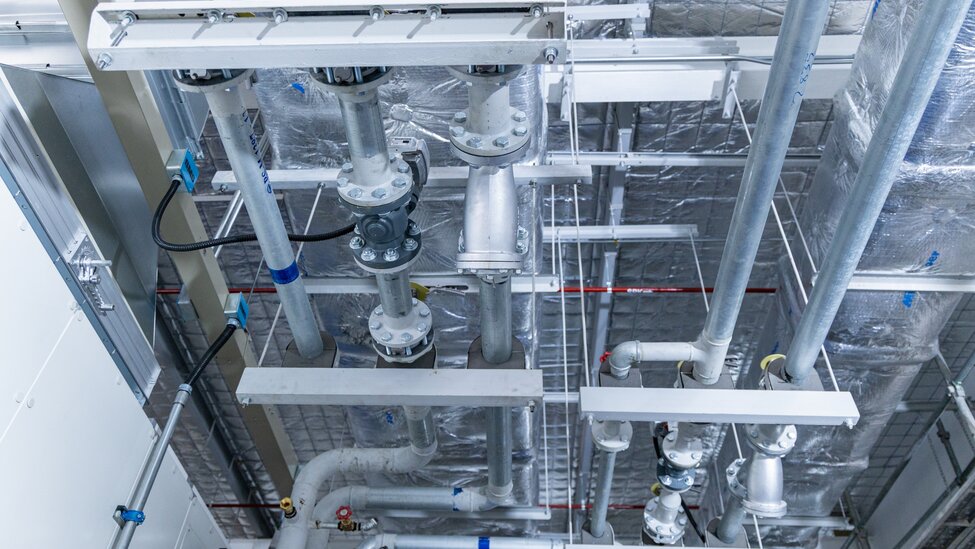
In cooling monitoring, a missed alarm is not a data quality issue, it is a machine destruction event. Senseca's flow switches and transmitters are designed to deliver dependable switching signals the moment flow drops below a defined threshold, giving the control system the time it needs to shut down or alert before thermal damage occurs. Across the product range, switching outputs are designed to fail safe: in the event of a sensor fault, the output returns to the alarm state, ensuring the absence of a signal is never misread as a confirmation of flow. For cooling circuits carrying water, coolant mixtures, or oil, Senseca offers dedicated devices matched to the media, with wetted materials and seals selected for long-term compatibility.

A cooling monitoring sensor sits inside the machine, exposed to pressure, fluid contamination, and continuous duty cycles. It cannot be fragile. Senseca's flow devices are built with ceramic axes, high-quality bearings, and robust housings rated to PN 16, PN 100, PN 200 or PN 800 (certain special versions), depending on the model, with stainless steel and brass constructions available to match the process conditions. Ingress protection ratings of IP 65 and IP 67 ensure the electronics are sealed against the moisture and coolant splashing typical of machine environments. The result is instrumentation that continues to perform accurately over the full service life of the machine, without requiring frequent recalibration or replacement.

Cooling circuits vary widely: pipe diameters, process connections, media types, pressure ratings, switching points, and output signal requirements differ from one machine to the next. Senseca is a manufacturer, not a distributor, which means the product range can be adapted to meet the specific demands of each application. Set points, measuring ranges, process connections, materials, and pressure ratings can all be configured to specification, covering the requirements of both machine builders integrating sensors into new designs and end users retrofitting existing installations. The same instruments used for cooling monitoring are frequently applicable to lubrication monitoring as well, giving customers a single, consistent sensing platform across multiple machine functions.


Advanced robotics and smart automation technologies have improved production precision and speed, but increased machine density also means greater heat generation per unit of floor space, making cooling monitoring a critical element of any modern machine design.