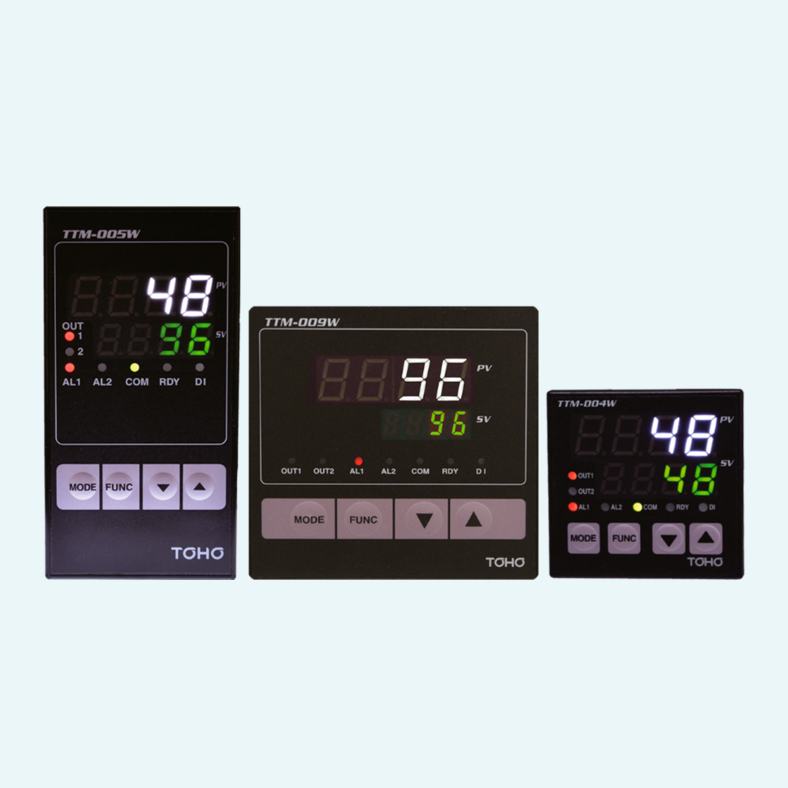
Stable process control starts with a controller that can adapt to the signal, output and panel format required by the machine. This series controls temperatures and other process values, with DIN 48x48, 48x96 and 96x96 versions for different cabinet layouts.
The controller supports Pt100, JPt100 and thermocouple inputs, as well as voltage and current signals for process values from -1999..+9999 digits. Depending on the configuration, it can work as a 2-point, 3-point or continuous controller. PID control with auto-tuning helps optimize control behavior during commissioning.
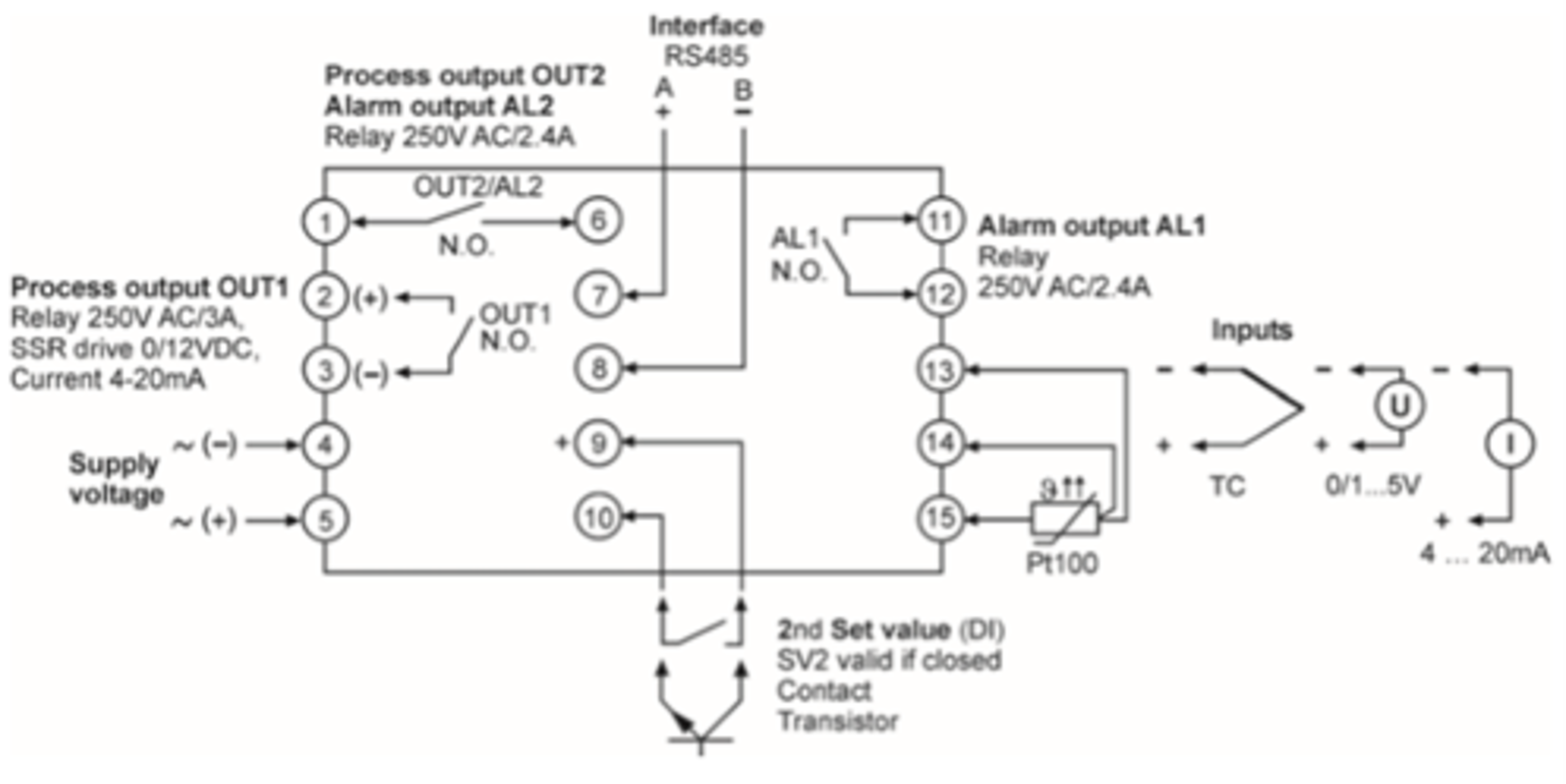
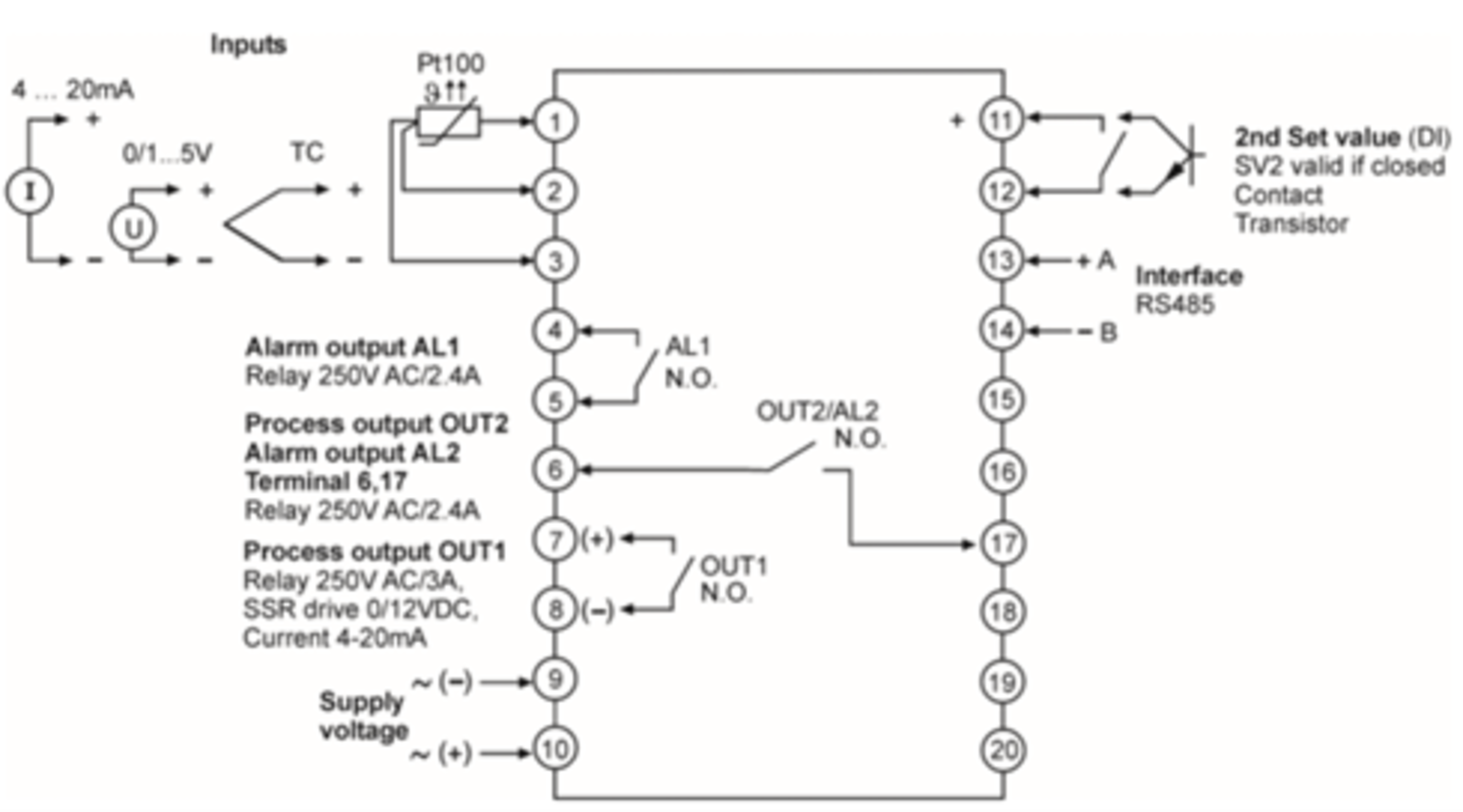
Outputs can be selected as relay, electronic 0/12 V DC for SSR relay or continuous 4..20 mA. Up to 2 alarm outputs are available, with configurable alarm functions. Optional RS485 with MODBUS RTU, MODBUS ASCII or Toho protocol supports fieldbus integration, while the two-line LED display and four buttons keep operation clear at the panel.

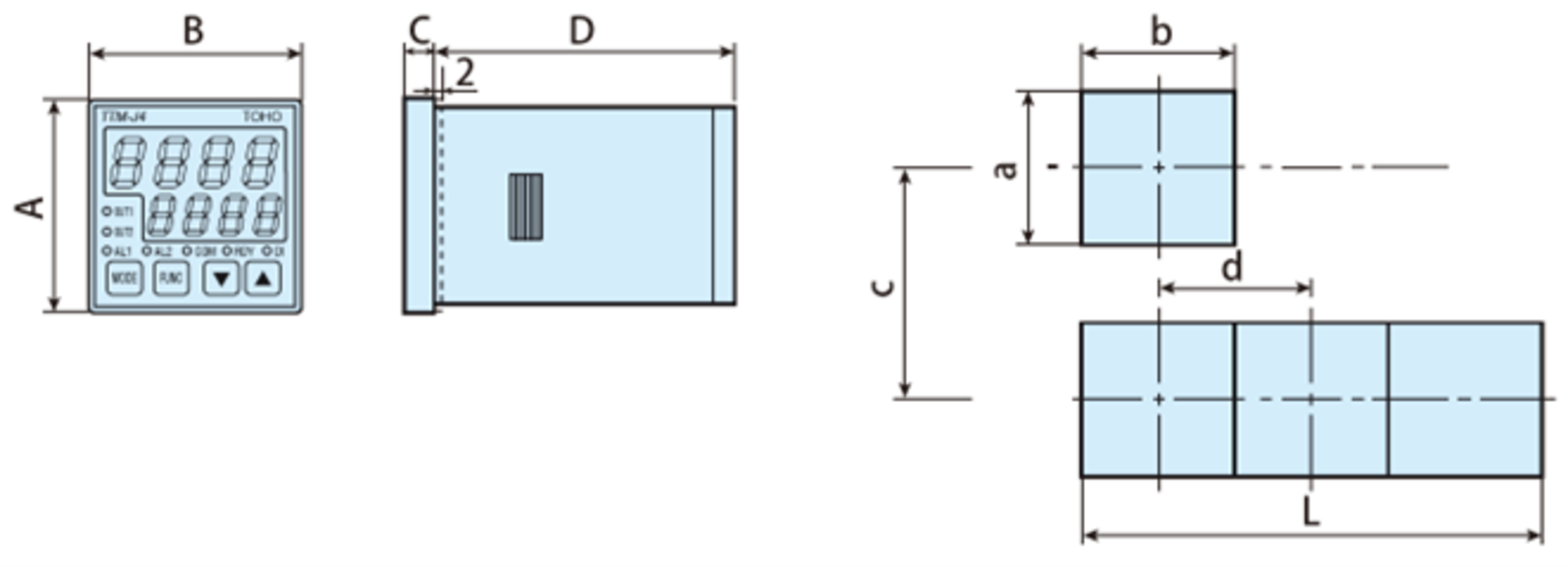
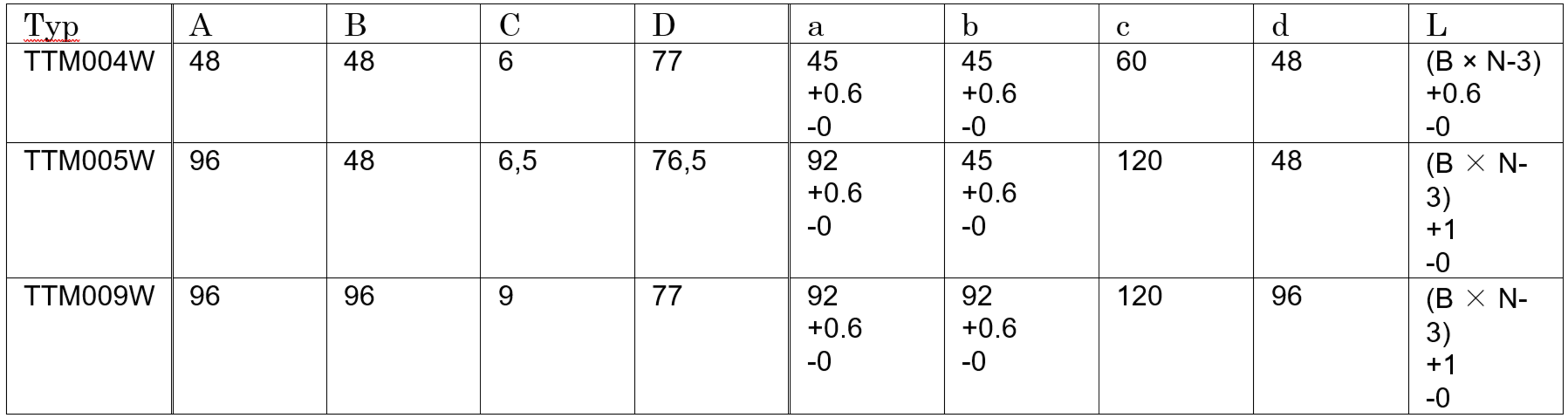
The series includes DIN 48x48, DIN 48x96 and DIN 96x96 panel formats.
Input versions support Pt100, JPt100 and thermocouple Types J, K, N, R, S, T and B.
Current and voltage input versions support 4..20 mA and 0/1..5 V DC signals with programmable display scaling.
OUT1 can be configured as SPST relay, electronic bistable 0/12 V DC output or continuous 4..20 mA output.
The ME option adds a digital input for functions such as second setpoint, timer control, Auto/Manual switching or self-optimization start.
Process value and set value are shown on separate LED displays, with configuration via four front buttons.