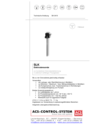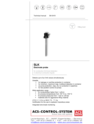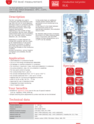
Hygienic tanks and pipelines need level detection that combines clean installation with dependable switching. SLK detects limit levels in conductive liquids and is designed for food and pharmaceutical applications with high hygiene requirements.
Used with suitable evaluation units, the probe supports overflow protection, dry-run protection, two-point pump control and minimum, maximum or multipoint detection. Depending on the selected version and the use of the conductive vessel wall as ground, up to 4 switching points can be realized.
The stainless steel process connection supports pressure stability up to 20 bar, while ETFE probe insulation enables medium temperatures up to +130°C. Hygienic connections include DIN 11851 milk tube and flush-mounted thread versions. Material options such as Hastelloy C22, Hastelloy B4 and titanium support use with corrosive or aggressive media.

The probe is used with suitable evaluation units for level detection and level control in conductive liquids.
Process connections include DIN 11851 milk tube versions, flush-mounted O-ring threads and metal-seated G½".
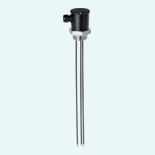
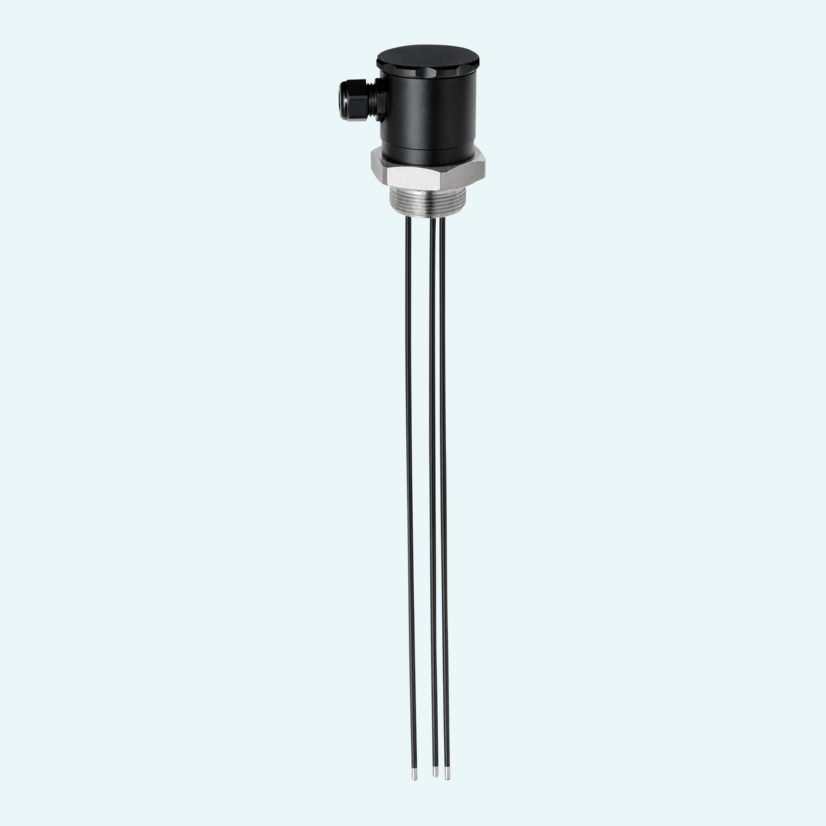
Versions with 1, 2, 3 or 4 electrode rods are available, with the maximum rod count depending on the selected process connection.
The ground connection is made in the probe head and transferred through the thread to the conductive vessel.
An optional Diodenmodul LBM can be installed in the probe head for permanent circuit monitoring with a suitable evaluation unit.
Probe rods are available in CrNi steel, Hastelloy C22, Hastelloy B4, titanium or 1.4404 steel with 50 mm tantalum tips.
ETFE insulation is available for 4 mm and 8 mm probe rods, with rod lengths configurable by order code.