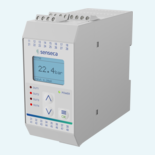
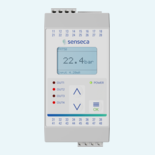

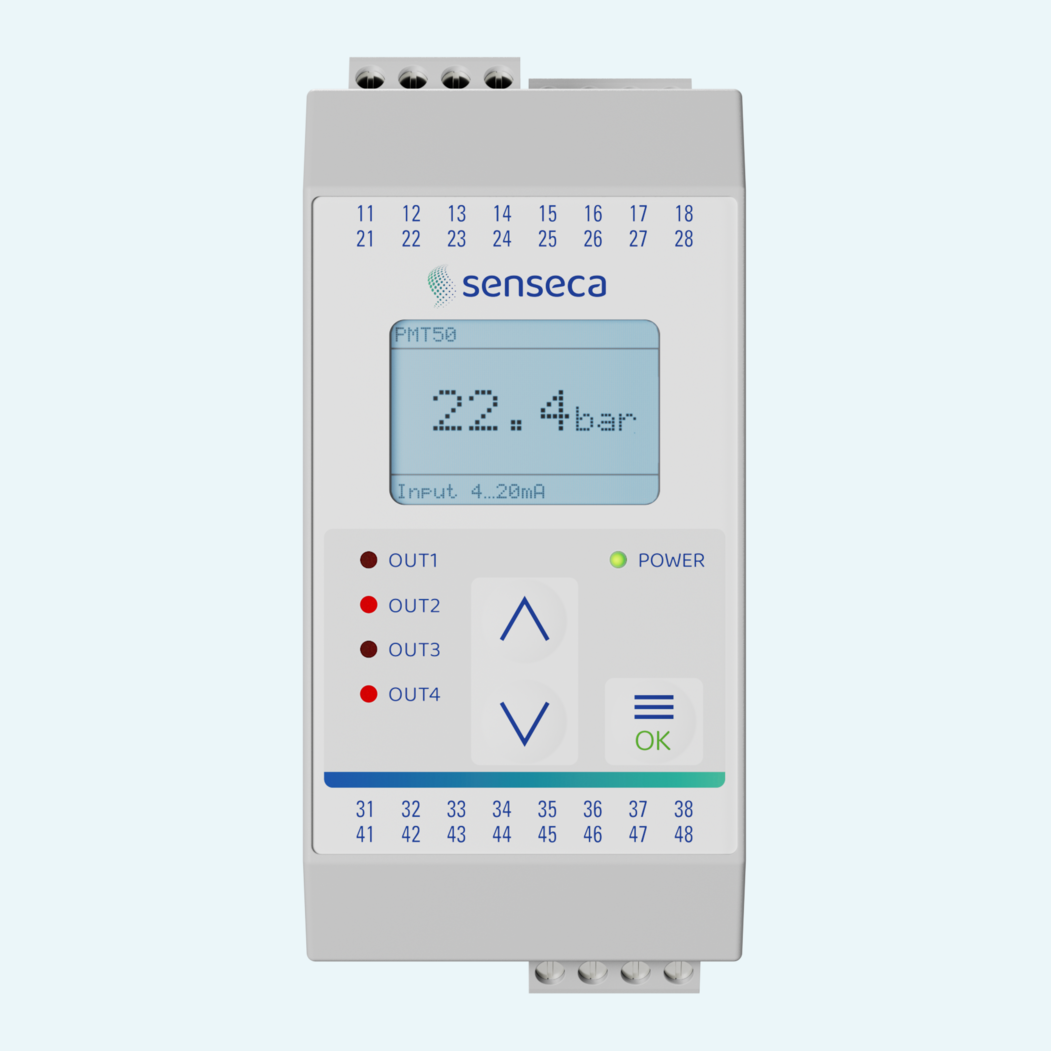
Analog signals often need conditioning before they are useful for control, display or monitoring. PMT50-1 converts standard 0/4..20 mA and 0/2..10 V DC inputs into isolated analog outputs, with programmable scaling for applications where the input signal must be adapted to the process value.
The device supports linearization and characteristic adjustment via up to 32 base points, making it suitable for sensor curves that are not purely linear. Programming is handled with front buttons and the graphic LCD, while Teach In can store start, end and curve values automatically when the input signal is available.
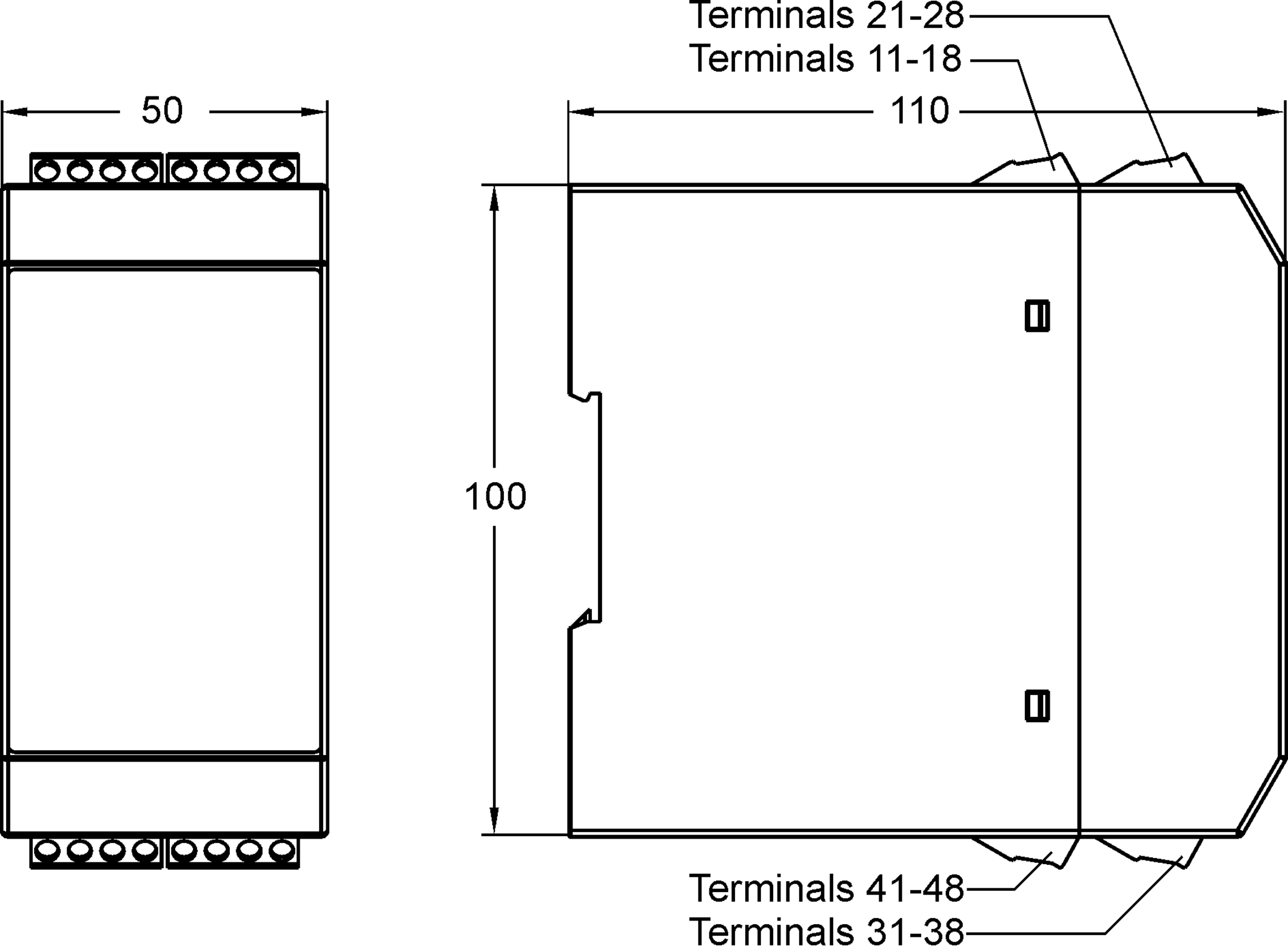
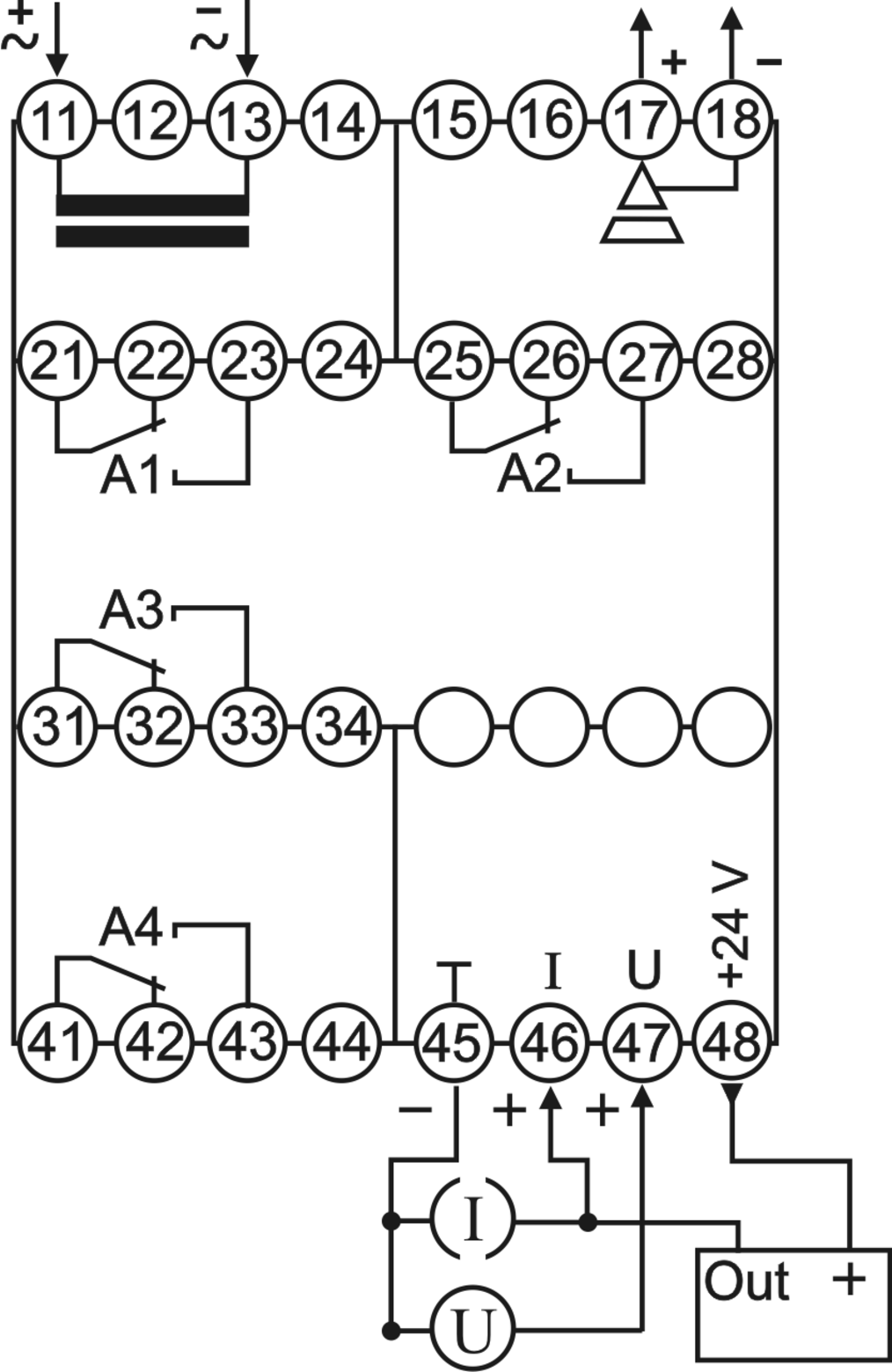
For monitoring and control tasks, up to 4 SPDT relay alarm outputs can be added and programmed as min. or max. functions. The integrated 24 V DC transmitter supply powers 2- and 3-wire transmitters up to 30 mA, and input fault detection can drive defined analog output and alarm relay behavior.

The transmitter accepts 0/4..20 mA and 0/2..10 V DC analog input signals.
The output provides 0/4..20 mA or 0/2..10 V DC and is galvanically isolated.
Parameters are set using the front buttons together with the graphic 128 x 64 pixel LCD.
Input signals for start value, end value or characteristic curve values can be stored automatically.
The device includes a simulator function for checking configured behavior during setup.
Break of wire detection can set the analog output to 0 mA, < 3.6 mA or >21.5 mA and switch alarm relays.