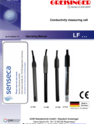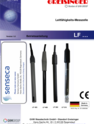
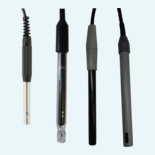
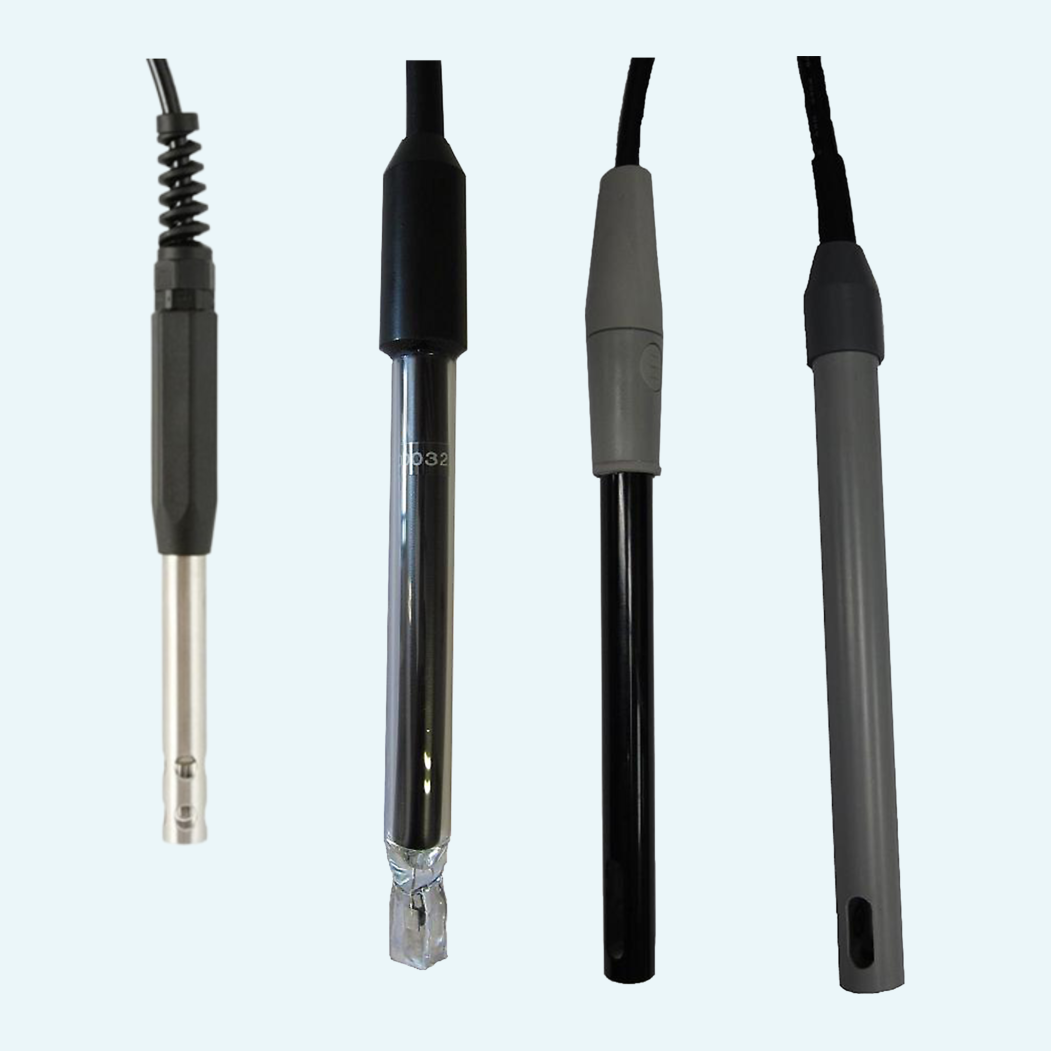
Reliable conductivity checks start with the right measuring cell for the medium. The LF family gives users a choice of cells for pure water below 200µS/cm, drinking water, aquaristics, fish farming and selected low-conductivity fuels such as petrol or diesel with LF 210.
Application-specific electrode designs support the measurement task: LF 200 RW uses a concentric 2-pole stainless steel cell for pure water, LF 210 uses platinum electrodes with a glass shaft, and LF 400/LF 425 use 4-pole graphite cells for broader media such as seawater, titration and sewage. Conductivity ranges extend from 0.0 ... 200.0 µS/cm up to 0…1000 mS/cm, depending on variant.
Integrated temperature measurement, variant-specific cell constants and the 7-pole bayonet fitting with ingress protection (IP65) help keep the device connection protected during use. The cells are specified for -5 ... +80 °C ambient conditions, with short-term exposure up to 100 °C.


The cells are intended for use with GMH 5430/50 and GHM Silverline SLC measuring devices.
The family includes 2-pole stainless steel, 2-pole platinum, 2-pole graphite and 4-pole graphite measuring cells, selected according to medium and range.
Variant materials include 4404 stainless steel/PEEK, glass/platinum, graphite with PPE/PS, 316 stainless steel/epoxy and PVC-C/epoxy.
LF 200 RW, LF 202, LF 210 and LF 400 use NTC (10 kΩ / 25 °C); LF 425 uses Pt 1000.
Minimum immersion depth is variant-specific, from min. 25 mm for LF 200 RW to 100 mm for LF 202, LF 210, LF 400 and LF 425.
Handle the measuring cells carefully, protect them from soiling and avoid contact with water-repellent materials such as oil or silicone.