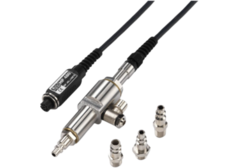
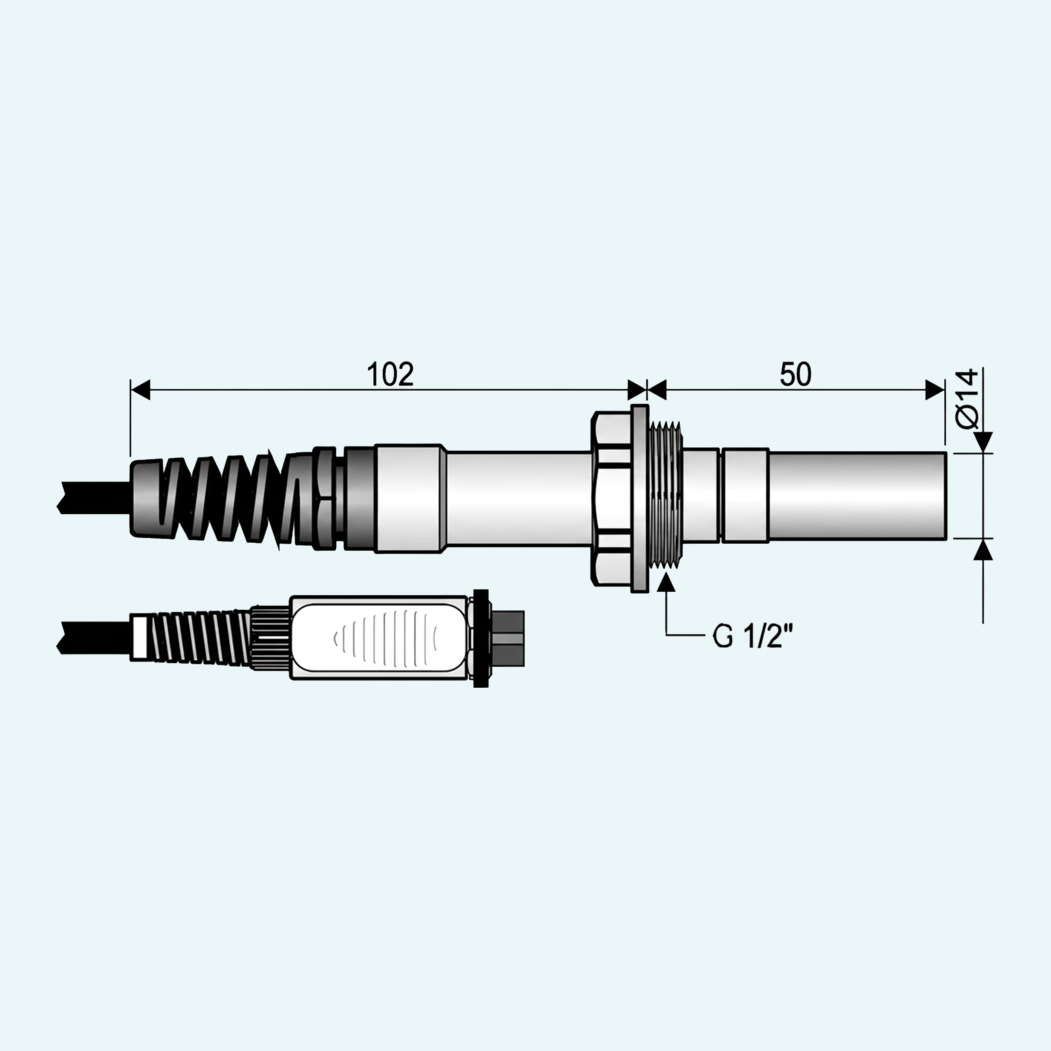
The HP481 is a combined Pt100 temperature and relative humidity probe designed for direct in-line installation in compressed air pipes and pressurized systems. With G ½" threading, it can be mounted in any position without a separate measuring chamber — suitable for both pressurized and vacuum applications. Equipped with a SICRAM module for direct plug-and-play compatibility with supported instruments, and a 15µ sintered AISI 316 stainless steel filter for reliable protection of the sensing element. Operating range: -40...+60 °C, 0...100 %RH, 1...16 bar. Dew point accuracy: ±1 °C DP (0...+20 °C DP). Controlling dew point in compressed air systems prevents corrosion, ice blockages, bacterial growth, and ensures product quality in air-contact processes. Protection degree IP65. Cable length 2 m.
| Accuracy relative humidity |
±1.5% RH (0...90%RH) ±2.0% RH (90...100%) @ T=15...35°C ±(1.5 + 1.5% of the displayed value)% RH in the remaining temperature range
|
|---|---|
| Relative humidity range |
0...100 %RH
|
| Sensor type relative humidity |
Capacitive
|
| Sensor type temperature |
Pt100
|
| Accuracy temperature |
±0.25 °C
|
| Temperature range |
-40...+60 °C
|
| Operating temperature |
-40...+80 °C
|
|---|---|
| Degree of protection case |
IP65
|
| Connection |
8-pole male DIN45326 connector
|
|---|---|
| Cable |
2 m
|
| Material |
AISI 304 stainless steel, AISI 316 stainless steel
|
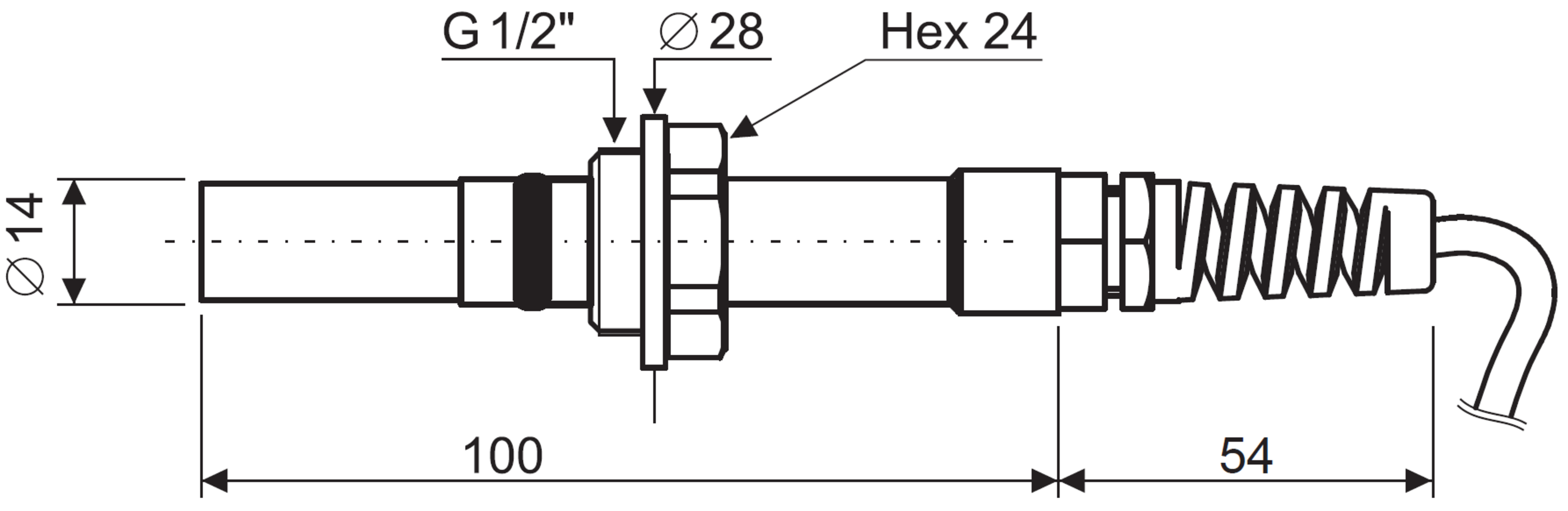
HP481 is a combined relative humidity and temperature probe suitable for in-line installation. The probe can be used in pressurized pipes, or in which vacuum is required. It is equipped with a G ½” threading for the connection to the system and can be installed in any position. The probe is equipped with a sintered steel filter.
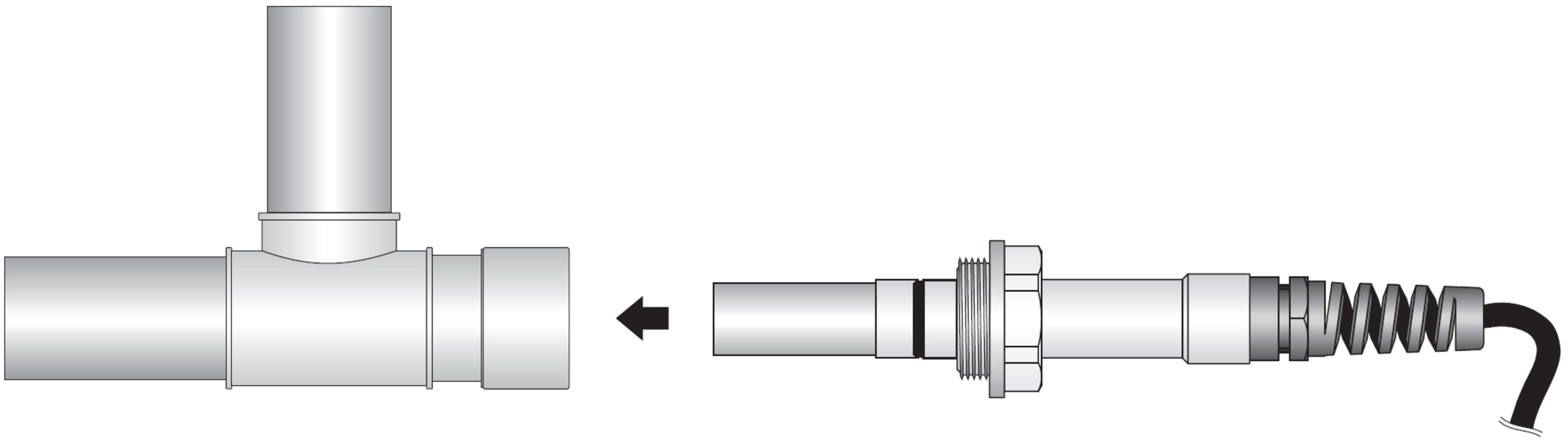
For direct connection of the probe, use a fitting with internal G 1/2” thread on the side which will be placed in the probe. The connection must be airtight. Ensure that the probe does not obstruct the normal flow of air through the distribution line.
In all modes of installation, it is recommended that you place in the plant, upstream of the sensor, a safety valve to be closed manually in case of maintenance of the probe.
Periodically check the cleanliness of the sintered filter of the probe, in order to maintain optimum response characteristics of the probe. The filter can be washed with a detergent that leaves no traces.