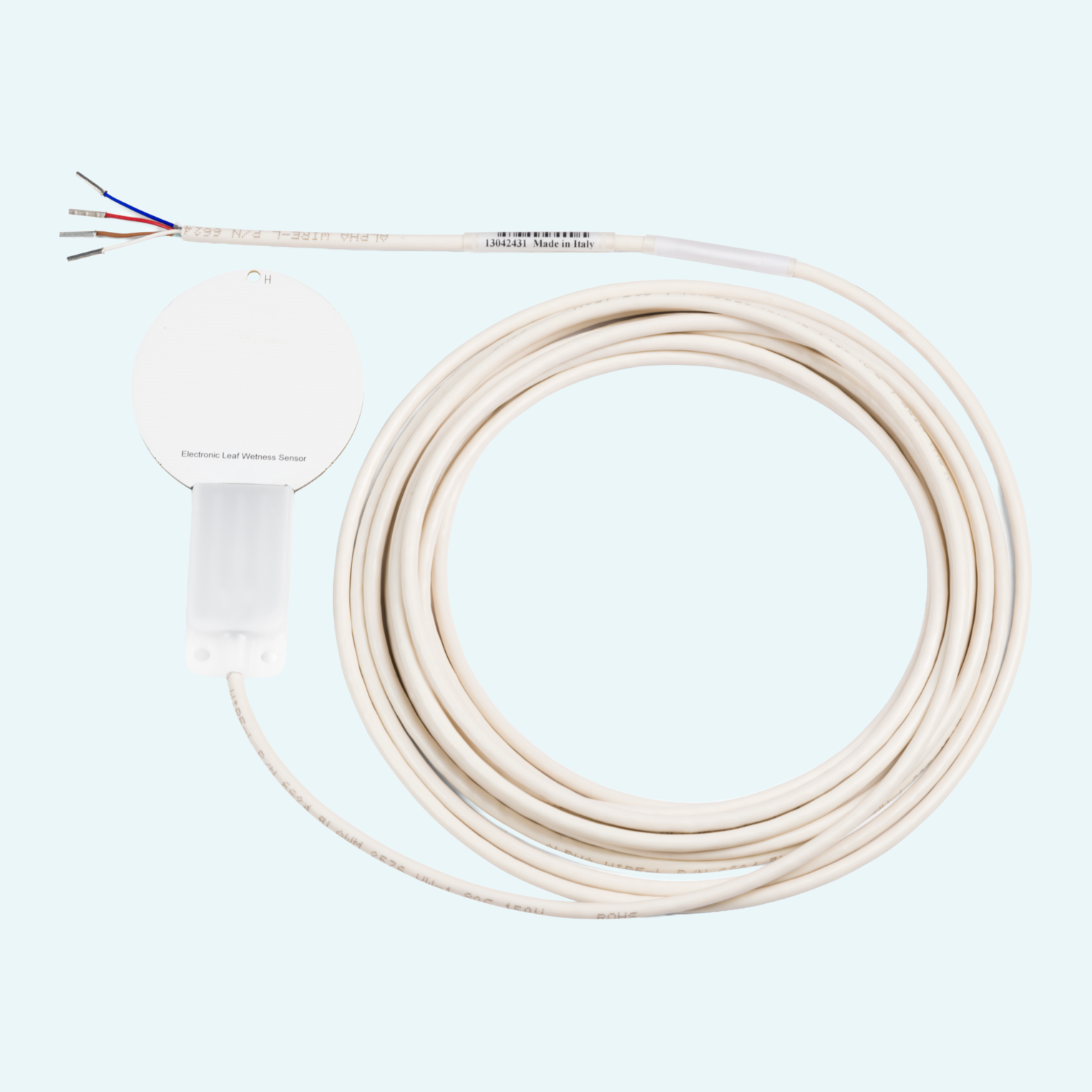
Condensation on leaves can turn quickly into a crop health risk. HD3901 helps agricultural and floriculture teams track leaf wetness degree, supporting better timing of phytosanitary treatments to reduce the risk of mold and fungal infections where condensation is present.
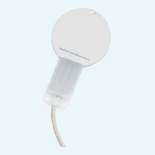
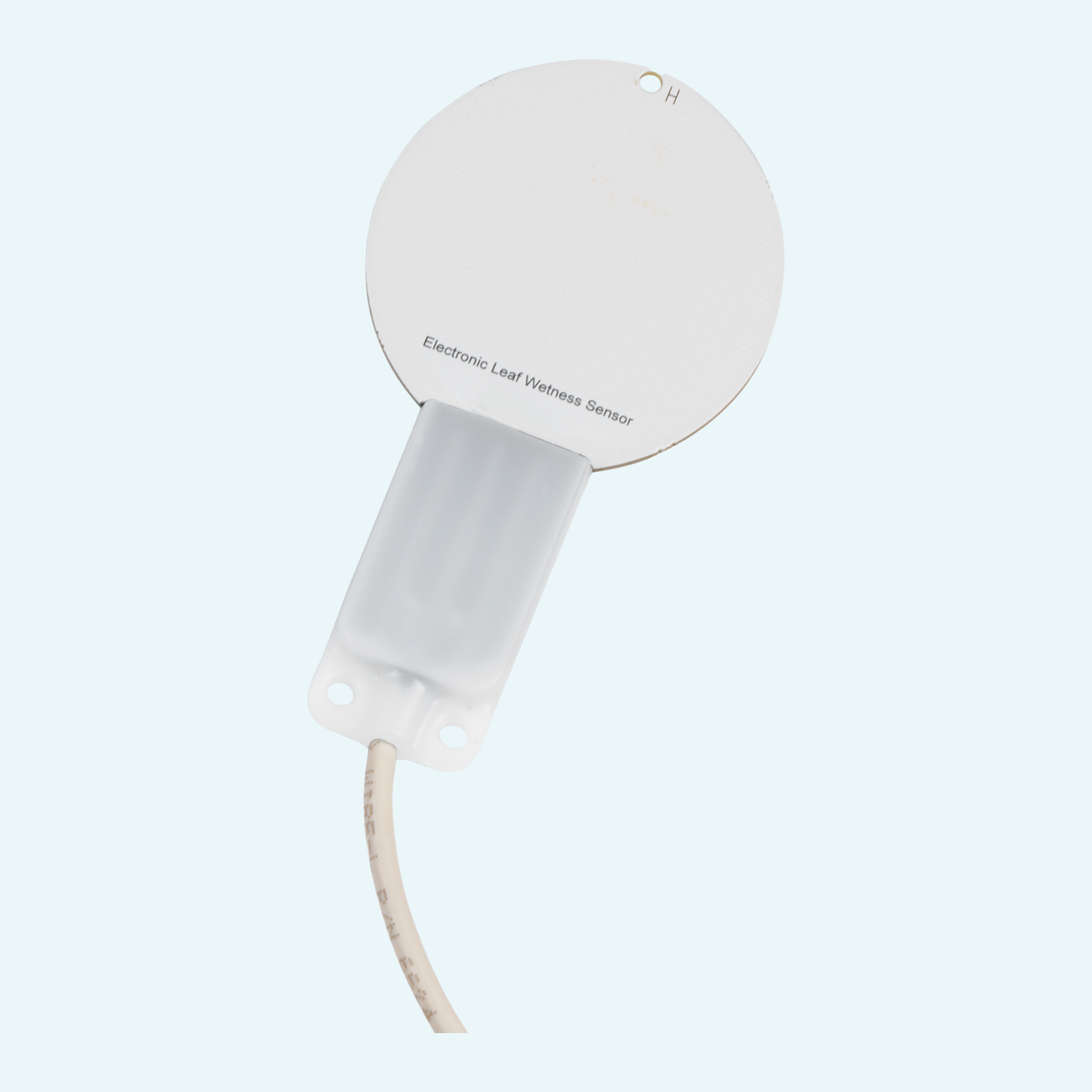
The dual sensitive surface measures wetness on both the top and bottom sides of the leaf, reflecting the different drying times of each side. Its capacitive principle detects changes in dielectric constant caused by water droplets, including small droplets that common resistance or conductivity-based sensors may not detect. The white sensitive surface and selected materials simulate the thermal and radiative properties of a real leaf.
HD3901 provides two 0.5…3 V analog outputs corresponding to 0…100% wetness degree. Factory calibration, < 1 mA consumption, IP67 protection and treated surfaces resistant to atmospheric agents and pesticide chemicals make it practical for open-field, greenhouse and meteorological station use.


Grid-shaped electrodes detect changes in dielectric constant caused by water droplets on the sensitive surface.
Materials and white color are selected to simulate the thermal and radiative properties of a real leaf.
he sensor is supplied calibrated and does not require calibration by the user before installation.
Two voltage outputs provide separate signals for the upper and lower sensitive surfaces, marked by the H symbol.
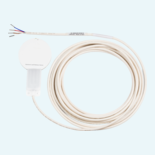
Models are available with a fixed 4-pole cable ending in open wires, in 5 m or 10 m lengths.
The sensor should be installed with the sensitive surface upward and inclined about 30÷45° to the ground.
Use a data logger with at least two voltage analog inputs to record wetting and drying behavior over time.
Periodic cleaning with water and normal detergent helps avoid deposits that could alter measurement.