
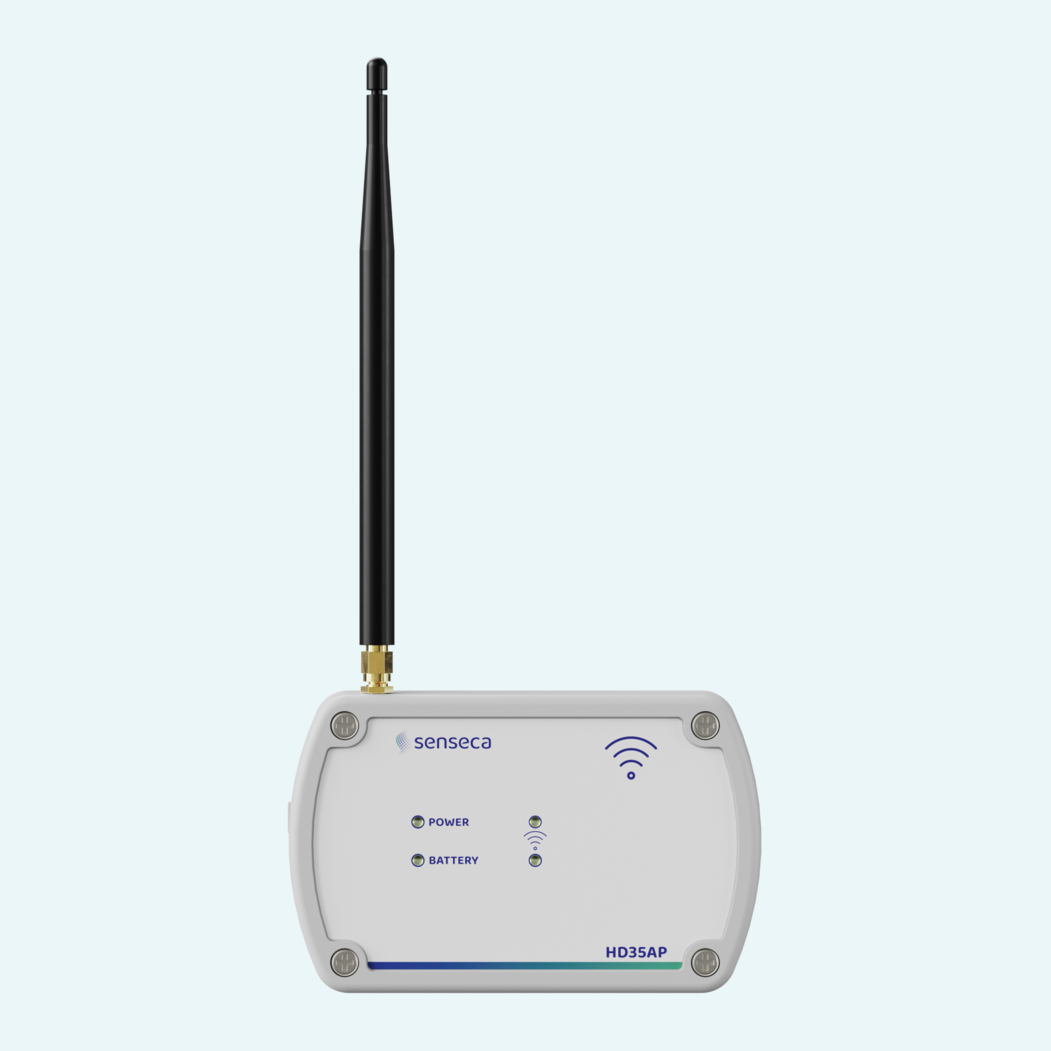
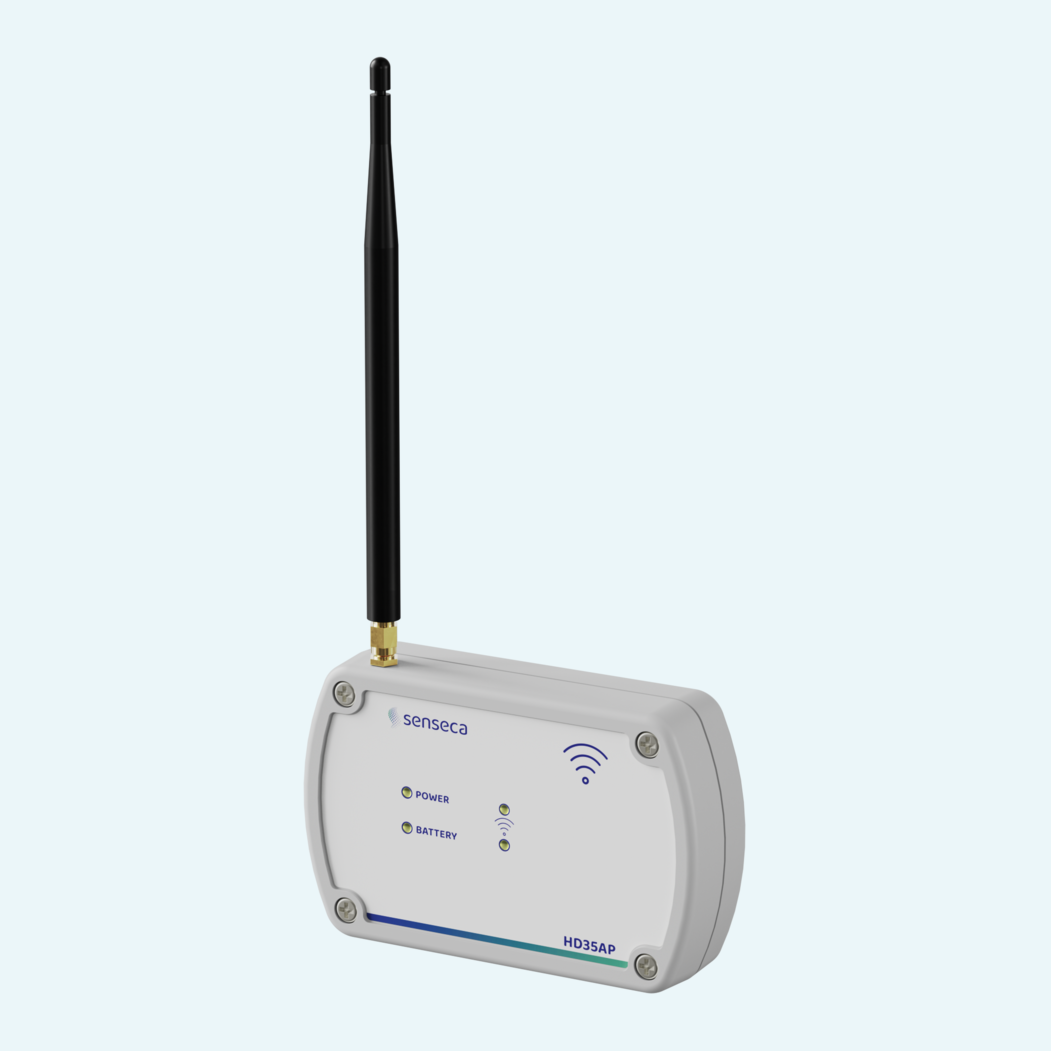
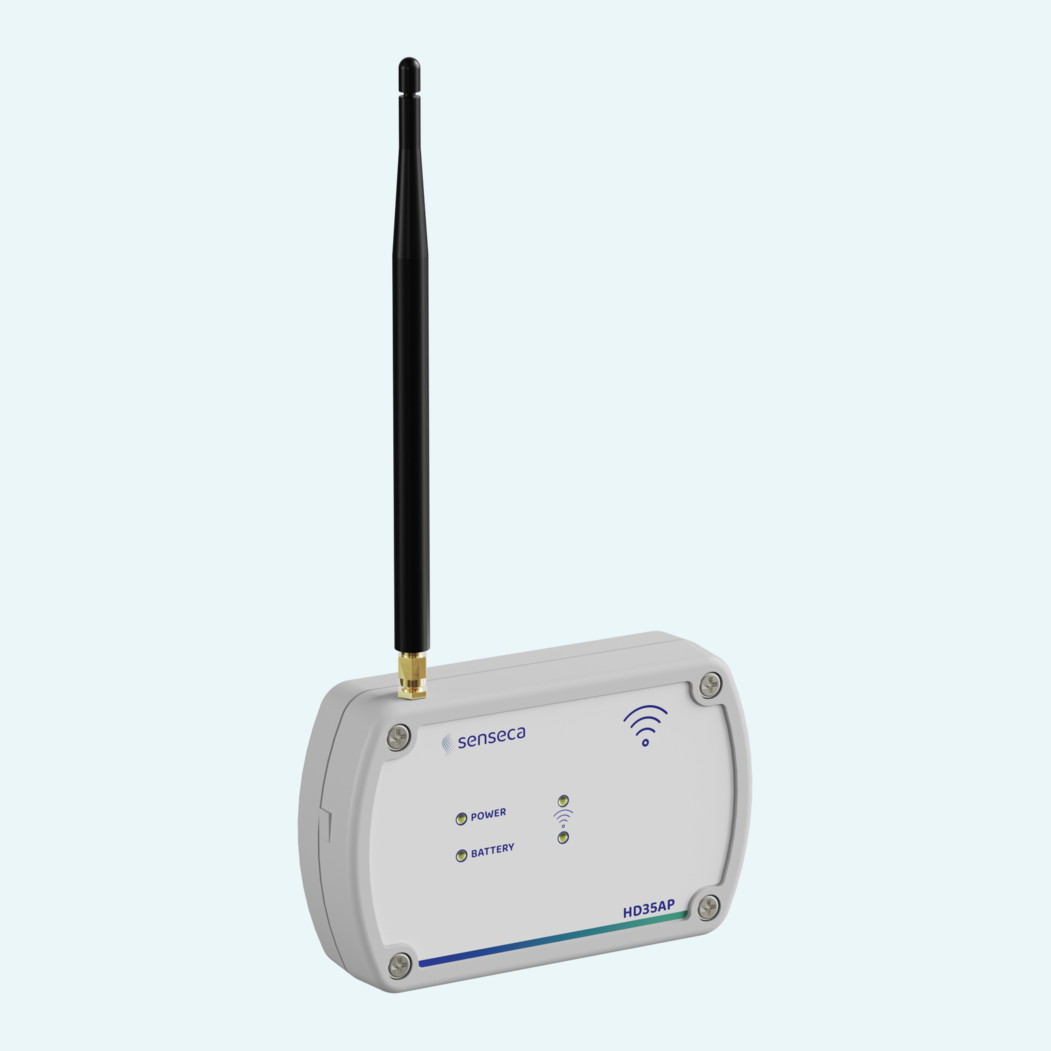
Reliable wireless monitoring depends on a strong link between field devices and the system that uses the data. This access point family receives measurements from HD35ED data loggers and transfers them to a PC, PLC or Internet-based connection, reducing the need for signal cabling across the installation.
The family supports different site architectures, from direct USB connection to RS485 with Modbus-RTU, Ethernet, Wi-Fi and cellular versions. Bidirectional RF communication helps ensure the correctness of transmitted data, while HD35RE repeaters can extend coverage where distance, walls or outdoor conditions make radio transmission more demanding.
For monitoring tasks where fast reaction matters, threshold overruns are transmitted immediately to the base unit and displayed on the PC. Depending on the selected version and available connection, alarms and recorded data can also be sent by e-mail, FTP, HTTP server or SMS.


The access point receives measurements from HD35ED data loggers and transfers them to the PC, PLC or Internet connection used by the selected version.
The family includes versions with USB, RS485 with Modbus-RTU, Ethernet, Wi-Fi and cellular communication, depending on model.
The HD35 system can include data loggers, repeaters and a remote alarm module, with up to 255 devices including the base unit.
Selected versions support Modbus RTU, Modbus TCP/IP and proprietary TCP/IP communication for integration into local systems.
Ethernet, Wi-Fi and cellular versions can send recorded data by e-mail, to an FTP address or to an HTTP server.
The system allows two alarm thresholds for each measured variable, with configurable hysteresis and alarm delay.